
Updated: 26 November 2026. Plans and prices from Starlink’s US order pages (sample address in Nebraska), speeds from Starlink’s FCC broadband labels and Ookla’s H1 2026 report, rules from the FCC and NTIA. Starlink can change prices at short notice.
Starlink has become a mainstream option in the US: Ookla estimates that around 22 percent of all Starlink customers worldwide are in the United States, its largest market. For a farmhouse without cable it can be the only real broadband; in a suburb with fiber it is usually the more expensive and slower choice. This guide shows what Starlink costs in the US today, how fast it really is, where it beats 5G home internet and the old satellite providers – and the fees that catch new customers off guard.
The key facts in 20 seconds
Where fiber and cable do not reach, Starlink usually outperforms DSL and geostationary satellite by a wide margin.
Ookla measured higher median downloads for fiber, cable and the three big 5G home internet providers.
A one-time demand surcharge in busy areas and dynamic monthly prices can raise the bill.
Roam with the Starlink Mini starts at $55 a month and can be paused when you are not travelling.
Who Starlink is for in the US
Starlink is a low-Earth-orbit satellite service: the dish on your roof talks to satellites a few hundred miles up instead of a cable in the street. That makes it available almost anywhere with a clear view of the sky – and it explains both its strengths and its limits.
Rural homes with DSL or no wired broadband, cabins and farms, households switching from HughesNet or Viasat, and anyone who needs a backup line independent of local cables.
Homes with fiber or cable available, and areas with strong 5G home internet. Here Starlink is rarely the cheapest or fastest choice.
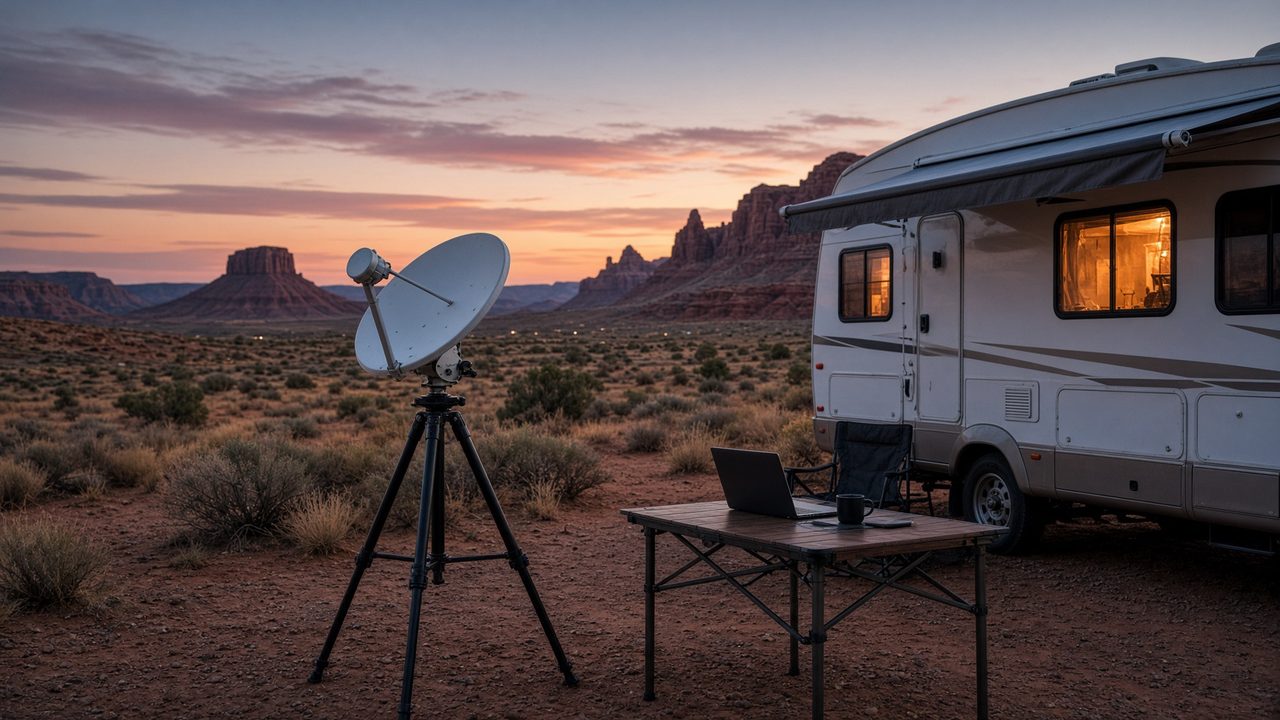
RV owners, full-time travelers, boaters and vanlifers who need internet on the move – a case for Roam and the Starlink Mini.
Locations with heavy tree cover or tall buildings blocking the northern sky. Obstructions cause dropouts that no plan can fix.
Starlink plans and prices in the US
Starlink sells three Residential plans for a fixed address and three Roam plans for use on the move. During Black Friday through Cyber Monday (ends 30 November 2026) Residential plans are 50% off for the first six months in select areas. The figures below come from the order page for our sample address; our compact US price overview is updated when the promotion ends.
Swipe the table – more columns on the right
| Plan | Black Friday (6 months) | Regular | Typical download (FCC label) | Best for |
|---|---|---|---|---|
| Residential 100 Mbps | $27.50 | $55 | 80–100 Mbps | Small households, streaming in HD, work from home |
| Residential 200 Mbps | $42.50 | $85 | 140–200 Mbps | Families, 4K streaming on several screens |
| Residential Max | $65 | $130 | 170–320 Mbps | Heavy use, top network priority, optional Mini for travel |
| Roam 100GB | – | $55 | up to 300+ Mbps (plan description) | Occasional trips |
| Roam 300GB | – | $80 | up to 300+ Mbps (plan description) | Regular travel |
| Roam Unlimited | – | $175 | up to 300+ Mbps (plan description) | Full-time RV life, travel abroad |
All Residential plans include unlimited data and come without a contract or early termination fee. The 100 and 200 Mbps plans are only offered in select areas and are capped at those speeds. Starlink’s own FAQ says monthly prices have no fixed duration and can change with 30 days’ notice. See the plans available at your address.
The full cost: kit, installation, surcharges and taxes
The monthly fee is only part of the bill. At our sample address Starlink rents the kit instead of selling it: $0 upfront, $0 a month, but you return it if you cancel. On the 100 Mbps plan you get the new Starlink V5 with a Router Mini; 200 Mbps and Max come with the Standard kit and a Router 4.
Swipe the table – more columns on the right
| Cost item | Amount | Note |
|---|---|---|
| Kit | $0 upfront, $0/month | Rental; return the kit if you cancel |
| Professional installation | $99 (100 Mbps) / $0 (200 Mbps, Max) | Optional on 100 Mbps; extra charges possible for non-standard installs |
| Due at checkout | $20 plus taxes | Shown at checkout for our sample address |
| Demand surcharge | varies by location | One-time fee in congested areas, shown at checkout |
| Taxes and fees | varies by location | Listed on Starlink’s FCC broadband labels |
Demand surcharge: the fee in busy areas
In areas where the network is crowded, Starlink adds a one-time demand surcharge for new Residential customers. Trade media have reported amounts of $750 to $1,000 in parts of Washington, Oregon and Idaho, and some reports mention up to $1,500 in 2026. The amount appears at checkout before you pay. If it shows up for your address, compare it with Roam or with waiting – Starlink adjusts surcharges as capacity changes.
Dynamic pricing: your monthly fee can move
In autumn 2026 Starlink began setting Residential prices partly by local network congestion. According to reporting by TechSpot and PCMag, customers in busy areas saw increases of 10 to 20 percent – Residential Max up to $156 – while new customers in some cities got 30 to 50 percent off. Starlink’s FCC labels reflect this with price ranges of $44–66, $68–102 and $104–156 a month. More background is in our article on Starlink dynamic pricing.
How fast is Starlink in the US?
Two sources give a realistic picture. Starlink’s FCC broadband labels list typical download speeds of 80–100 Mbps (100 Mbps plan), 140–200 Mbps (200 Mbps) and 170–320 Mbps (Max), uploads of 15–40 Mbps and latency of 30–40 ms in the continental US.
Ookla’s independent Speedtest data for the first half of 2026 shows a US median of 119.71 Mbps download (+12% year over year) and 20.73 Mbps upload (+42%). About 40 percent of Starlink users reached the FCC broadband benchmark of 100/20 Mbps. Median downloads fell in 16 states and D.C., including busy markets such as Texas, Florida and Washington – partly because many new customers chose the capped 100 Mbps plan.
Your speed depends on your plan, obstructions and how many customers share your cell. In crowded areas evening speeds can drop noticeably.
Starlink vs. fiber, cable, 5G home internet and other satellites
Swipe the table – more columns on the right
| Technology | Availability | Performance | Choose it if… |
|---|---|---|---|
| Fiber | Cities and growing rural build-outs | Fastest and most stable; low latency | It is available at your address |
| Cable | Most towns and suburbs | Faster medians than Starlink in Ookla data | You want high speed at a predictable price |
| 5G home internet | Where mobile networks have capacity | Ookla: all three major providers had higher median downloads than Starlink in H1 2026 | Coverage at your address is strong |
| Starlink | Nearly everywhere with a clear view of the sky | 119.71 Mbps median download, 30–40 ms latency (FCC label) | Wired options are slow or missing |
| GEO satellite (HughesNet, Viasat) | Nationwide | Ookla measured around 41–46 Mbps medians in 2025; high latency due to orbit | Starlink is unavailable or too expensive for you |
The key difference to HughesNet and Viasat is physics: geostationary satellites orbit about 22,000 miles above Earth, so every signal travels much farther than with Starlink’s low-orbit satellites. That makes video calls and gaming far more responsive on Starlink.
Starlink for RVs, camping and boats
Roam is Starlink’s plan for people on the move. Roam 100GB and 300GB cover your home country and switch to unlimited low-speed data once the high-speed allowance is used; Roam Unlimited adds travel in more than 160 countries and territories. Starlink lists in-motion use and Standby Mode, which pauses service while keeping emergency messaging for a small monthly fee.
The Starlink Mini is the natural kit for this: on the US Roam order page it costs $99 (typically $249) or $8.25 a month for 12 months. Accessories such as a car adapter ($45) or roof rack mount ($27) are optional. Check Roam and the Mini offer. Our Starlink Mini review covers power draw and real-world results.
BEAD: federal broadband money for Starlink
Under the federal BEAD broadband program, SpaceX has won subgrants to serve hard-to-reach locations in several states, including Louisiana, Virginia, Tennessee and South Carolina. In Virginia, for example, the state recommended Starlink for 5,579 locations with a $3.3 million award.
In July 2026 NTIA asked states to remove satellite locations that new federal maps show as served by other networks, so the final number of Starlink BEAD locations is shrinking. If your home might be a BEAD location, check with your state broadband office: BEAD connections follow program terms – in Virginia, for example, BEAD funds free Starlink dishes for some locations.
HOA rules and renters: can they ban the dish?
The FCC’s Over-the-Air Reception Devices (OTARD) rule, 47 C.F.R. § 1.4000, limits how far HOAs, landlords and local rules can restrict satellite dishes of one meter or less that are used for fixed wireless service via satellite – on property you own or exclusively use, such as your roof or balcony. Starlink’s dishes are well under one meter, so the rule is likely to apply; common areas like shared roofs are not covered. This is a general explanation, not legal advice – the FCC’s OTARD guide explains the details and the complaint process.
How to order Starlink in the US with the $100 reward
Check your sky
Use the Starlink app’s obstruction check from the spot where you want to mount the dish. In the continental US the dish usually faces roughly north, so check that direction in particular.
Enter your address
Open starlink.com with our referral link and enter your service address. The order page shows plans, price, surcharges and the referral banner.
Pick plan and installation
Choose 100 Mbps, 200 Mbps or Max – or Roam for travel. Book professional installation if you do not want to climb on the roof.
Activate and keep it two months
Activate the kit and pay the first month. After two months Starlink issues the $100 reward as credit or – after switching in the account – as cash.
Start your Starlink order with our referral code →
Common mistakes to avoid
Kits from retailers do not qualify for the referral reward, and in congested areas the demand surcharge can still be charged on activation.
Trees that look harmless in winter can block the dish in summer. Check obstructions before you order.
Black Friday prices apply for six months. After that the regular – possibly dynamic – price applies.
The 100 Mbps plan is cheap but capped. For several 4K streams or large uploads, 200 Mbps or Max is the safer choice.
Starlink in the US: frequently asked questions
Is Starlink worth it in the US?
Where fiber, cable or strong 5G home internet are unavailable, usually yes: Starlink delivered a 119.71 Mbps median download in H1 2026, far ahead of DSL and geostationary satellite. With fiber or cable at your address, those are typically faster and cheaper.
How much does Starlink cost per month?
At our sample address $55 (100 Mbps), $85 (200 Mbps) or $130 (Residential Max); Roam costs $55, $80 or $175. Until 30 November 2026 Residential is 50% off for the first six months. Prices vary by address.
Do I have to buy the dish?
For Residential plans at our sample address, no: the kit is rented for $0. For Roam, the Starlink Mini costs $99 (typically $249) or $8.25 a month for 12 months.
What is the Starlink demand surcharge?
A one-time fee for new Residential customers in congested areas. Trade media have reported $750 to $1,000 and more in parts of the Northwest. The amount is shown at checkout.
Is there a contract or cancellation fee?
No. Starlink Residential and Roam have no contract and no early termination fee; a 30-day trial allows a full refund if you return the kit.
Can my HOA stop me from installing Starlink?
The FCC’s OTARD rule limits restrictions on dishes of one meter or less on property you own or exclusively use. Shared roofs and common areas are not covered.
Does Starlink work in an RV while driving?
Starlink lists in-motion use for Roam. Roam 100GB and 300GB cover your home country; Roam Unlimited adds travel abroad.
How do I get the $100 referral reward?
Order on starlink.com with a referral link, activate and stay subscribed for two months. Retail kits and returning customers are not eligible.
Bottom line: strong in the countryside, optional in town
Starlink has closed much of the gap to wired broadband: around 120 Mbps median download and 30–40 ms latency make video calls, streaming and remote work practical where the alternative used to be DSL or HughesNet. In towns with fiber, cable or strong 5G home internet, Starlink is rarely the best value – and demand surcharges and dynamic pricing make busy areas more expensive.
If you live rurally, Black Friday is a sensible time to start: half price for six months, $0 for the rented kit and $100 back after two months. Check the offer for your address.
TransparencySources and method
- Starlink: Residential, United States (manufacturer, order page and FCC broadband labels, checked 26 Nov 2026)
- Starlink: Roam and Starlink Mini, United States (manufacturer, checked 26 Nov 2026)
- Starlink Help Center: referral program (manufacturer)
- FCC: Over-the-Air Reception Devices Rule (OTARD) (authority)
- Ookla: US Broadband Performance Report H1 2026 (independent measurement data)
- Broadband Breakfast: Ookla – Starlink performance surged in first half of 2026 (trade media, 15 Sep 2026)
- TelecomLead: Starlink US upload speeds jump 42% (trade media, Nov 2026)
- Via Satellite: Ookla data on Starlink, Viasat and HughesNet (trade media, 6 Feb 2026)
- TechSpot: Starlink expands surge-style pricing nationwide (trade media, Nov 2026)
- Notebookcheck: $1,000 demand surcharge in three US states (trade media)
- SatelliteInternet.com: Starlink congestion charge up to $1,500 (trade media, 27 Jan 2026)
- Broadband Breakfast: Satellite BEAD awards to be reduced (trade media, 14 Jul 2026)
- Cardinal News: Virginia BEAD and Starlink (news, 19 Nov 2025)
- ConnectLA: Louisiana signs BEAD agreement with Starlink (state authority, 11 Jun 2026)
Method: Plan prices were read from Starlink’s US order pages on 26 November 2026 for a sample address in Ainsworth, Nebraska; speed ranges and price ranges come from the FCC broadband labels on the same page. Independent speeds are Ookla medians as reported for H1 2026. The technology comparison is an editorial assessment based on these sources.
Referral links: Starlink links marked as referral links contain our referral code. Your price does not change; eligible new customers and drohnen.de may each receive a reward under Starlink’s terms.
Disclaimer: This guide provides general information and is not legal or financial advice. Prices, surcharges and availability are set by Starlink and can change at any time.
Editorial note: This article was researched and written with AI assistance and checked by the editorial team.

