Spaceflight · SpaceX Starship · Live status 13 Nov 2026, 23:40 UTC
Starship Flight 15 live: booster catch aborted, Ship in orbit – tower catch planned for about 21:20 UTC on Saturday
Liftoff came at 22:47 UTC on Friday. Super Heavy did not return to the tower and splashed down in the Gulf instead. Ship 42 has reached orbit and, according to SpaceX’s timeline, is due to be caught by the tower arms at about 21:20 UTC on Saturday, 14 November, after roughly 14 orbits.
Time to the planned Ship catch (SpaceX timeline, all times approximate)
- 0days
- 21hrs
- 50min
- 00sec
- Liftoff: Fri 13 Nov, 22:47 UTC (16:47 CT), Starbase Pad 2
- Booster 22: catch aborted, splashdown in the Gulf
- Ship 42: in orbit, catch planned Sat 14 Nov at about 21:20 UTC
Starship Flight 15 is flying, but the planned double catch is now only half possible: SpaceX called off the catch of its Super Heavy booster, and Booster 22 came down in the Gulf off the Texas coast.[4][8][10] The Ship 42 upper stage, meanwhile, has reached orbit.[8][10] After about 22 hours and roughly 14 orbits it is meant to return to Starbase and become the first Starship upper stage ever caught by the arms of a launch tower. SpaceX’s published timeline puts that moment at about 21:20 UTC on Saturday, 14 November – 15:20 local time in Texas.[1][9]
The rocket lifted off at 22:47 UTC on Friday, 13 November, from Pad 2 at Starbase, Texas.[12][8] SpaceX has not yet said why the booster did not return to the tower; spokesperson Dan Huot said the team would investigate, according to Space.com.[8] Whether Ship 42 actually flies back to the tower depends on several health checks during the mission. Contingency splashdown areas in the Pacific and the Gulf are in place.[1][11]
Updated: . Actual times from SpaceX posts on X, Space.com, CNN, CBS News and Next Spaceflight; planned times from the flight timeline on SpaceX’s mission page, calculated from liftoff at 22:47:36 UTC. Next update straight after the Ship catch attempt.
Livestream · official coverage
SpaceX is streaming the Ship catch – start time for catch coverage to follow
SpaceX streams the flight on X and on its mission page and says coverage is planned to continue through the Ship catch, with views from orbit along the way.[1] It had not announced a separate start time for the catch coverage at the time of writing. According to the flight plan, the return begins with the deorbit burn at about 20:23 UTC and the catch is due at about 21:20 UTC.[1] As soon as SpaceX publishes a new stream post, we will replace the launch post embedded below.
Live webcast of Starship’s 15th flight test starts now
— SpaceX (@SpaceX) November 13, 2026
The embedded post marked the start of the official broadcast on Friday at 21:58 UTC; its link leads to the ongoing stream on X.[7]
Live timeline: what has happened on Flight 15 so far
All times in UTC. The timeline is based on SpaceX’s posts on X, cross-checked against the live coverage from Space.com and CNN. We only embed posts whose status URL we opened ourselves and compared with the other sources. The time shown is when the event happened, not when the post was published.
- Fri 13 Nov
FAA clears Flight 15
The US Federal Aviation Administration issues Revision 10 of the launch licence on launch day, explicitly for a single launch of Flight 15 including a landing in the Gulf. NASASpaceflight reported the approval at 19:01 UTC.[13][14]
Starship Flight 15: FAA approval has arrived.
— NASASpaceflight (@NASASpaceflight) November 13, 2026
Original post on X, loaded with X’s official widget; without consent the link remains available. Context: without this licence modification SpaceX could not have launched. It arrived even later than for Flight 14, which was cleared two days before liftoff.
- Fri 22:47
Liftoff from Pad 2
Booster 22 and Ship 42 lift off from Starbase, two minutes after the 75-minute launch window opened.[2][8][12]
Liftoff of Starship!
— SpaceX (@SpaceX) November 13, 2026
Original post on X, loaded with X’s official widget; without consent the link remains available. Context: Space.com and Next Spaceflight both give 22:47 UTC as the launch time.
- Fri 22:50
Hot staging
Ship’s six Raptor engines ignite and the booster turns back towards Starbase.[3][10]
Hot-staging separation! Starship’s Raptor engines have ignited, and the Super Heavy is boosting back towards Starbase for a catch
— SpaceX (@SpaceX) November 13, 2026
Original post on X, loaded with X’s official widget; without consent the link remains available. Context: as the post shows, the booster catch was still the plan at this point.
- Fri 22:54
Booster catch aborted
SpaceX diverts Super Heavy to an offshore splashdown in the Gulf; Space.com and CNN report that the booster came down there. SpaceX had not given a reason at the time of writing.[4][8][10]
Super Heavy has diverted to an offshore splashdown in the Gulf
— SpaceX (@SpaceX) November 13, 2026
Original post on X, loaded with X’s official widget; without consent the link remains available. Context: a V3 booster has still not been caught by the tower. A Gulf landing was provided for in the licence as the fallback.
- Fri 22:56
Ascent burn complete
Ship shuts down its engines and, as planned, initially coasts on a suborbital trajectory while teams check its systems.[5][10]
Starship’s ascent burn is complete. Starship is now on a planned suborbital trajectory as teams check systems to confirm we are good to proceed to orbit today
— SpaceX (@SpaceX) November 13, 2026
Original post on X, loaded with X’s official widget; without consent the link remains available. Context: the suborbital path is deliberate – it would bring the Ship safely into the ocean if a problem appeared.
- Fri 23:11
“Go for orbit”
Flight control approves the short burn of a single Raptor that is meant to put the Ship into an orbit of about 275 km.[6][10]
Go for orbit! Starship will soon perform a short burn with a single Raptor engine to enter an ~275 km orbit of Earth
— SpaceX (@SpaceX) November 13, 2026
Original post on X, loaded with X’s official widget; without consent the link remains available. Context: on Flight 14 in September this decision was a close call after an engine failure; this time SpaceX reported no problems.
- Fri 23:14
Ship 42 in orbit
SpaceX reports a “nominal orbit insertion” on its webcast. It is only the second time a Starship has orbited Earth.[8][10]
Context: SpaceX had not posted a separate X update on the orbit at the time of writing; the confirmation comes from the webcast, as reported by Space.com and CNN.
- from 23:28
Starlink satellites being deployed
The Ship has begun deploying its 26 Starlink V3 satellites; by about 23:33 UTC the first three were out, according to Space.com. SpaceX expects about 40 minutes for all of them, Space.com reports.[8][10]
Context: the Ship rotates slowly during deployment so that a camera on one of the satellites can image its heat shield. Completion had not been confirmed at the time of writing.
- Sat 20:23
- Sat 21:20
Planned times up to the Ship catch
SpaceX publishes its flight plan as offsets from liftoff (T+) and labels it “All Times Approximate”. We calculated the times from the 22:47:36 UTC liftoff. CBS News gives 3:21 p.m. Eastern for the deorbit burn, i.e. 20:21 UTC; the two-minute difference comes from the slightly different launch time CBS uses.[1][11]
Swipe to see more columns
| Event | T+ (SpaceX) | UTC | Texas (CT) | Status |
|---|---|---|---|---|
| Liftoff | 00:00:00 | Fri 22:47 | Fri 16:47 | done |
| Booster catch | 00:06:35 | Fri 22:54 | Fri 16:54 | aborted, splashdown |
| Orbit insertion | 00:26:10 | Fri 23:14 | Fri 17:14 | done |
| Starlink deployment | 00:35:01–01:17:40 | Fri 23:22–Sat 00:05 | Fri 17:22–18:05 | started |
| Early Hawaii return check | 01:27:46 | Sat 00:15 | Fri 18:15 | pending |
| Mid-mission Chile return check | 07:15:35 | Sat 06:03 | Sat 00:03 | pending |
| Final Hawaii return check | 20:41:55 | Sat 19:29 | Sat 13:29 | pending |
| Deorbit burn | 21:35:57 | Sat 20:23 | Sat 14:23 | pending |
| Reentry | 22:10:46 | Sat 20:58 | Sat 14:58 | pending |
| Landing burn | 22:32:16 | Sat 21:19 | Sat 15:19 | pending |
| Ship catch at the tower | 22:32:34 | Sat 21:20 | Sat 15:20 | pending |
The three return checks are decision points. If something is wrong, flight control can bring the Ship down in a controlled way early or late near Hawaii, or mid-mission off Chile. Even after reentry, SpaceX keeps a late diversion to the Gulf in reserve in case the Ship or the tower does not allow a safe catch.[1][11]
The key facts in 20 seconds
Booster 22 and Ship 42 launched as planned, and Ship reached orbit after the “go for orbit” call.
SpaceX diverted Super Heavy to the ocean shortly before its return to the tower. No reason has been given yet.
If it works, an upper stage would be back at the launch tower from orbit for the first time. A double catch is no longer possible on Flight 15.
The FAA issued the licence modification for Flight 15 on 13 November, hours before liftoff.
What Flight 15 is designed to demonstrate
Flight 15 was planned as the first mission to return both Starship stages to the launch site and catch them with the tower’s mechanical arms, known as the “chopsticks”. SpaceX described a successful outcome as the first full recovery of an orbital launch system.[1] Elon Musk called the plan a “profound technology milestone” in October.[19] The two catches were never meant to happen at the same time: the booster returns minutes after liftoff, the Ship only after a full day in space.
With the booster diverted to the Gulf, the double catch is off. What remains is the more demanding half. A Ship has to survive reentry at orbital speed, fly back over land and hit the tower to within a few metres. SpaceX has caught three Super Heavy boosters before, all of the first generation (V1); it has never caught a Ship.[1]
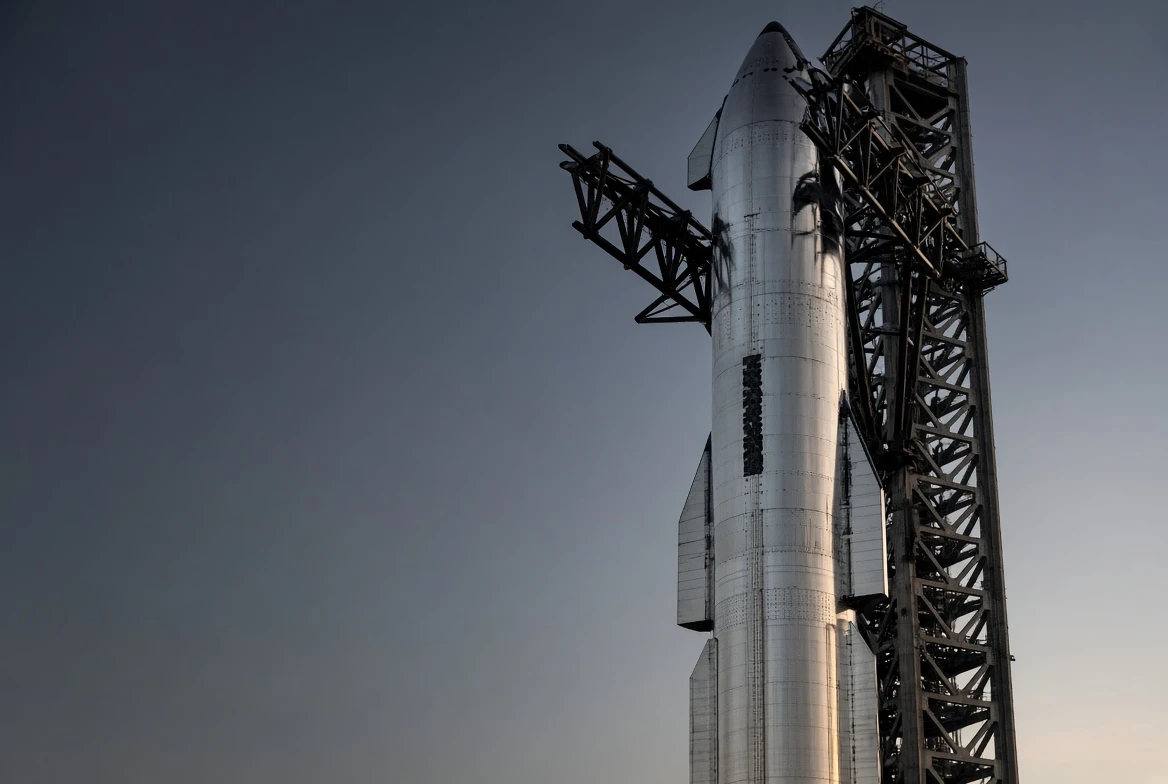
After staging, Super Heavy turns around, fires a boostback burn and lowers itself into the arms with a landing burn. On Flight 15 SpaceX diverted it to the ocean instead.
The upper stage completes its orbital flight, fires a deorbit burn, survives reentry and then has to return precisely to the tower.
The Ship also carries an operational payload: 26 next-generation Starlink satellites, three of them with cameras.
Orbit and deployment can succeed even if the catch is called off. What matters is which phase works.
Booster 22 and Ship 42: what the ground tests showed
Both vehicles were new and flew for the first time on Flight 15. Booster 22 fired all 33 Raptor 3 engines for about 15 seconds on 25 October.[15][17] Ship 42 completed two static fires on 26 and 27 October: one with a single Raptor simulating the deorbit burn, one with all six engines for the full planned duration.[16][18] SpaceX says this is the first return-and-catch attempt for a Super Heavy V3 booster.[1]
Static fires prove that engines, feed lines and controls work on the ground. They cannot simulate weightlessness, reentry heating or a tower approach in wind. The V3 boosters have had a difficult record so far: on Flights 12 and 13 the boosters were lost during landing attempts over the sea, and on Flight 14 Booster 21 only simulated a landing offshore.[22][20]
Return only after clearance: health checks and contingency zones
The flight back to the tower is not automatic. SpaceX says Starship will only return to the launch site if flight control has confirmed that the systems critical for reentry, the landing burn and the tower approach are healthy.[1] The flight plan contains three return checks – early over Hawaii, mid-mission over Chile and a final Hawaii check about 20 hours and 42 minutes after liftoff.[1]
If a check fails, the Ship can be brought down in pre-cleared ocean areas. CBS News quotes SpaceX describing early and late splashdown options around Hawaii, a mid-mission opportunity several hundred kilometres off Chile and a late-reentry option into the Gulf if the Ship or the tower has a problem after reentry.[11] These are contingencies, not forecasts.

How the first Ship catch is supposed to work
After the deorbit burn at about 20:23 UTC, the Ship is due to re-enter the atmosphere at about 20:58 UTC.[1] According to SpaceX’s description quoted by CBS News, it will approach Starbase from the west, steer around the major cities of the Rio Grande Valley, pass north of South Padre Island and make its final turn south towards the tower over the Gulf.[11]
Near the pad, three Raptor engines are due to flip the Ship upright. The timeline then steps down from three engines to two and finally one as the vehicle descends between the tower arms; the catch is listed at T+22:32:34.[1][11] Seeing the Ship upright on video alone would not prove a safe catch. What counts is controlled contact with the arms, engine shutdown and the vehicle staying safely supported – and SpaceX’s confirmation.
Heat shield: three satellites take a look
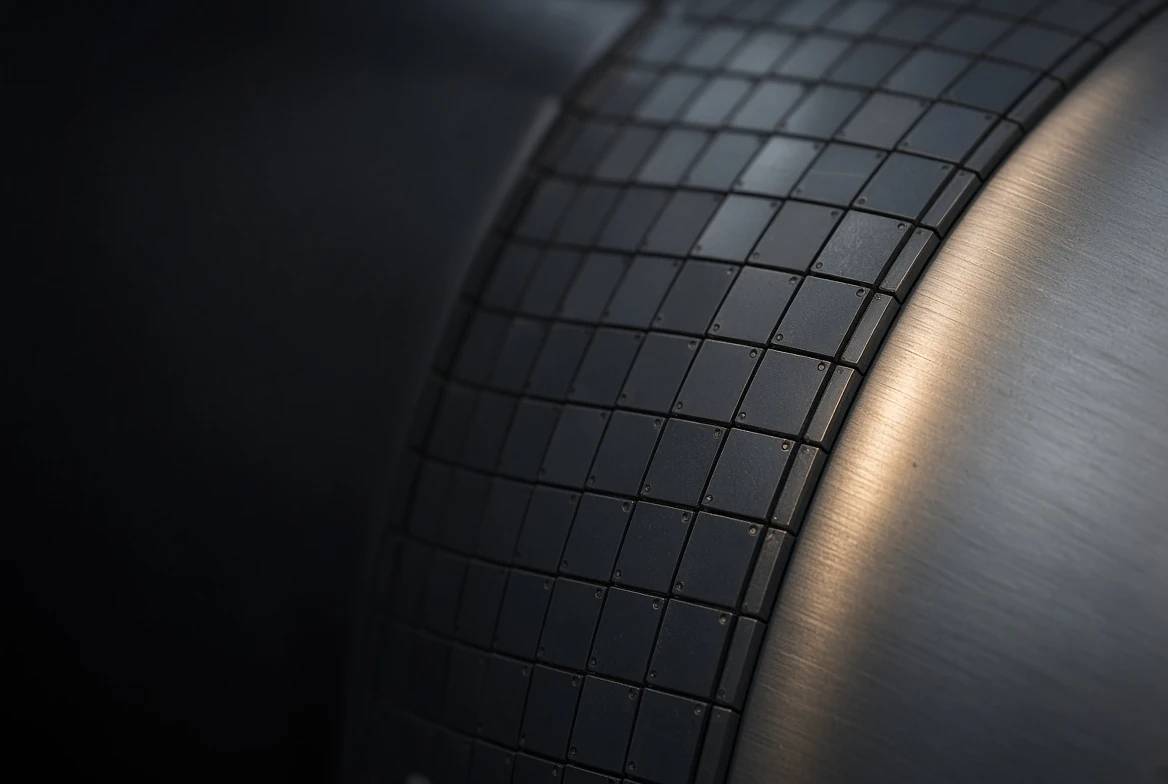
Three of the 26 Starlink satellites carry cameras to photograph the Ship’s heat shield and send the images to operators. SpaceX calls this one of several data sources for deciding whether the Ship is ready to return to the launch site.[1] The heat shield includes the improvements from Flight 14, with extra retention for tiles at risk of coming off during ascent, measures against plasma flowing behind the tiles and, over a large area, curved tiles meant to reduce heating in the gaps. These are company statements, not an independent inspection.[1]
FAA licence and hazard areas
The FAA approved Flight 15 on 13 November, hours before liftoff. Revision 10 of launch licence VOL 23-129 was issued and took effect that day; it applies to a single launch of Flight 15 and names the Gulf as a landing area, as represented in SpaceX’s application.[13] NASASpaceflight reported the approval in the afternoon Texas time, and Space.com referred to it in its live coverage.[14][8]
Separate hazard areas apply to Saturday’s catch. CNN describes a large zone over the Gulf for the ascent and a smaller zone near SpaceX’s facilities in South Texas that has to be clear before the possible landing at the launch site.[10]
Starship flights 1 to 15 at a glance
Only a few of the 14 completed flights ended with both stages doing what was planned. Boosters have been caught three times; a Ship never. The table summarises each flight; the per-flight details come from the individual Wikipedia articles listed on the Starship launch overview, cross-checked against specialist reports for Flights 14 and 15.[22][20][12]
Swipe to see more columns
| Flight | Date (UTC) | Booster / Ship | Booster | Ship |
|---|---|---|---|---|
| 1 | 20 Apr 2023 | B7 / S24 | No stage separation, flight terminated | Lost with the booster |
| 2 | 18 Nov 2023 | B9 / S25 | Broke up during boostback | Lost shortly before engine cutoff |
| 3 | 14 Mar 2024 | B10 / S28 | Lost shortly before splashdown | Reached its trajectory, lost on reentry |
| 4 | 6 Jun 2024 | B11 / S29 | Soft splashdown in the Gulf | Splashdown in the Indian Ocean |
| 5 | 13 Oct 2024 | B12 / S30 | First tower catch | Controlled splashdown |
| 6 | 19 Nov 2024 | B13 / S31 | Catch aborted, splashdown | Daylight splashdown |
| 7 | 16 Jan 2025 | B14 / S33 | Caught | Lost after about 8 minutes |
| 8 | 6 Mar 2025 | B15 / S34 | Caught | Engine failures, lost |
| 9 | 27 May 2025 | B14-2 / S35 | First reflight, broke up during landing burn | Lost attitude control, broke up on reentry |
| 10 | 26 Aug 2025 | B16 / S37 | Landing burn, splashdown in the Gulf | Eight Starlink simulators, splashdown with damage |
| 11 | 13 Oct 2025 | B15-2 / S38 | Reflight, splashdown in the Gulf | Eight simulators, splashdown, last V2 flight |
| 12 | 22 May 2026 | B19 / S39 | Engine failures, impact in the Gulf | First V3 flight, just suborbital, splashdown |
| 13 | 24 Jul 2026 | B20 / S40 | Landing burn failed, lost | 20 Starlink V3, suborbital, splashdown |
| 14 | 28 Sep 2026 | B21 / S41 | Simulated landing over the sea, no catch planned | First orbit, 26 Starlink V3, splashdown |
| 15 | 13 Nov 2026 | B22 / S42 | Catch aborted, splashdown in the Gulf | Orbit reached, tower catch planned (in progress) |
Flight 14 on 28 September 2026 was the first Starship to reach orbit. One of the Ship’s six engines failed during ascent; SpaceX cut the planned flight of almost ten hours to about three hours as a precaution and deorbited the Ship with a single Raptor.[20][21] Flight 15 is therefore only the second orbital Starship mission.
Starlink V3: what Flight 15 means for customers
Flight 15 carries 26 Starlink V3 satellites. According to SpaceX, each adds 1 terabit of capacity to the network, and all 26 together equal about ten Falcon 9 launches of V2 Mini satellites. After deployment the satellites unfold their antennas and solar arrays, raise their orbits with their own thrusters and, according to SpaceX, could begin serving customers within a few weeks.[1] More capacity per launch is the main reason why Starship matters for Starlink users worldwide.
Ad · Starlink offers by country · new customers · sign up by 30 Nov 2026
Starlink deals this month: up to half price by country
The satellites launched on flights like this one carry Starlink. If you want to sign up: in most markets we checked on 13 November, Starlink listed a new-customer offer with a sign-up deadline of 30 November 2026. Your service address decides which offer you get; hardware is priced separately.[23]
Residential 100 Mbps
£28/month instead of £40−30 %
Residential 100 Mbps
CA$52.50 / A$52.50/month instead of CA$75 / A$75−30 %
Residential and Roam
−50 %for the first 3 months, e.g. €17.50 instead of €35
Prices from Starlink’s public pricing data, checked 13 Nov 2026; offers end 30 Nov 2026
Referral link: your price does not change. Fees and hardware prices can depend on your address; the checkout is what counts.
What a successful Ship catch would change
A Ship catch on Saturday would show that a complete orbital rocket stage can return to its launch site – not yet that it can fly again quickly. On Falcon 9 only the first stage lands; the upper stage is expended. If SpaceX no longer has to build a new Ship for every Starlink launch, the cost per satellite falls and launch rates depend less on production. How much refurbishment a caught Ship needs will only become clear when the same vehicle flies again.
The booster side remains unfinished: no V3 Super Heavy has been caught yet, and Flight 15 did not change that. A full recovery of both stages on one mission is still to come.
Starship Flight 15: frequently asked questions
When will the Starship Flight 15 Ship be caught?
According to SpaceX’s timeline, at about 21:20 UTC on Saturday, 14 November 2026 (15:20 Central Time). The figure is based on liftoff time plus T+22:32:34; SpaceX labels all times as approximate.
When did Starship Flight 15 launch?
On Friday, 13 November 2026, at 22:47 UTC (16:47 Central Time) from Pad 2 at Starbase, Texas.
Why wasn’t the booster caught?
SpaceX had not explained it at the time of writing. It only said that Super Heavy had diverted to an offshore splashdown in the Gulf; spokesperson Dan Huot said the team would look into the cause, according to Space.com.
Is the Ship in orbit?
Yes. After the “go for orbit” call at 23:11 UTC, SpaceX reported a nominal orbit insertion on its webcast, as reported by Space.com and CNN. The plan calls for an altitude of about 275 km and roughly 14 orbits.
Where can I watch the Ship catch live?
On SpaceX’s X account and its mission page. SpaceX says coverage will continue through the Ship catch. The links are in the livestream box at the top of this article.
What happens if the catch is not possible?
Flight control would bring the Ship down in a controlled way: there are pre-cleared areas near Hawaii and off Chile, plus a late diversion option into the Gulf. The Ship only flies to the tower if all systems critical for reentry, landing burn and approach are healthy.
Has a Starship upper stage ever been caught?
No. Only Super Heavy boosters have been caught so far – three first-generation (V1) boosters, according to SpaceX. Flight 15 is the first attempt to catch a Ship.
Does Flight 15 carry Starlink satellites?
Yes, 26 Starlink V3 satellites. Deployment began on Friday evening UTC, according to Space.com and CNN; SpaceX expects about 40 minutes for all of them. Three of the satellites are meant to photograph the Ship’s heat shield.
Bottom line: halfway through Flight 15 – the bigger catch is still to come
Flight 15 has achieved liftoff, staging and orbit, but not the booster catch. That rules out the double catch, while the real novelty is still ahead: if Ship 42 is caught on Saturday evening, an upper stage will have returned from orbit to its launch tower for the first time. Whether that happens depends on the health checks in orbit and during the approach. If you want to watch, tune in from about 20:20 UTC; the catch is due at about 21:20 UTC.
TransparencySources and data23 entries
Research status: 13 November 2026, 23:40 UTC. The numbers in the text link to the sources. Company statements are marked as such. Launch time per Next Spaceflight and Space.com; CBS News gives 22:45 UTC. SpaceX had not published a reason for the aborted booster catch, and we have deliberately not speculated about one. Planned times are our own calculations from SpaceX’s timeline.
- SpaceX: Starship Flight 15 mission page and flight timeline (company source)
https://www.spacex.com/launches/starship-flight-15 ↩ Back to text - SpaceX on X: Liftoff of Starship!, 13 Nov 2026, 22:48 UTC (company source)
https://x.com/SpaceX/status/2121374779680964991 ↩ Back to text - SpaceX on X: Hot-staging separation, 13 Nov 2026, 22:51 UTC (company source)
https://x.com/SpaceX/status/2121375384793231499 ↩ Back to text - SpaceX on X: Super Heavy has diverted to an offshore splashdown in the Gulf, 13 Nov 2026, 22:55 UTC (company source)
https://x.com/SpaceX/status/2121376372576915909 ↩ Back to text - SpaceX on X: Ascent burn complete, planned suborbital trajectory, 13 Nov 2026, 22:57 UTC (company source)
https://x.com/SpaceX/status/2121376821635936710 ↩ Back to text - SpaceX on X: Go for orbit!, 13 Nov 2026, 23:11 UTC (company source)
https://x.com/SpaceX/status/2121380531640369470 ↩ Back to text - SpaceX on X: Live webcast of Starship’s 15th flight test starts now, 13 Nov 2026, 21:58 UTC (company source)
https://x.com/SpaceX/status/2121361977721106881 ↩ Back to text - Space.com: SpaceX Starship Flight 15 live updates, 13 Nov 2026, retrieved 23:24 UTC (specialist media)
https://www.space.com/news/live/spacex-starship-flight-15-live-updates-nov-13-2026-starship-first-double-landing-attempt ↩ Back to text - Space.com: What time will SpaceX launch Starship Flight 15? (Full mission timeline), 11 Nov 2026 (specialist media)
https://www.space.com/space-exploration/launches-spacecraft/spacex-starship-flight-15-1st-booster-ship-double-catch-full-recovery-what-time ↩ Back to text - CNN: Live updates – SpaceX Starship Flight 15, 13 Nov 2026, retrieved 23:24 UTC (news media)
https://www.cnn.com/2026/11/13/science/live-news/spacex-starship-flight-15-ship-catch ↩ Back to text - CBS News: SpaceX launches milestone Starship flight, 13 Nov 2026 (news media)
https://www.cbsnews.com/news/spacex-launches-starship-flight-rocket/ ↩ Back to text - Next Spaceflight: Starship Flight 15 launch details (tracker)
https://nextspaceflight.com/launches/details/8403/ ↩ Back to text - FAA: Launch licence VOL 23-129, Revision 10.0, issued 13 Nov 2026 (regulator)
https://drs.faa.gov/browse/excelExternalWindow/DRSDOCID173891218620231102140506.0001 ↩ Back to text - NASASpaceflight on X: Starship Flight 15 – FAA approval has arrived, 13 Nov 2026, 19:01 UTC (specialist media)
https://x.com/NASASpaceflight/status/2121317448477728883 ↩ Back to text - SpaceX on X: 33-engine static fire of the Super Heavy booster for Flight 15, 25 Oct 2026 (company source)
https://x.com/SpaceX/status/2114444137067844004 ↩ Back to text - SpaceX on X: Ship 42 static fires complete, 28 Oct 2026 (company source)
https://x.com/SpaceX/status/2115476295169814978 ↩ Back to text - Space.com: SpaceX ignites giant Super Heavy booster engines ahead of daring Starship launch, 26 Oct 2026 (specialist media)
https://www.space.com/space-exploration/launches-spacecraft/spacex-ignites-giant-super-heavy-booster-engines-ahead-of-daring-starship-launch-video ↩ Back to text - Space.com: SpaceX fires up Starship upper stage ahead of landmark Flight 15, 29 Oct 2026 (specialist media)
https://www.space.com/space-exploration/launches-spacecraft/spacex-fires-up-starship-upper-stage-ahead-of-landmark-flight-15-test-launch-video ↩ Back to text - Space.com: SpaceX will attempt 1st-ever double Starship rocket catch on next test launch, 20 Oct 2026 (specialist media)
https://www.space.com/space-exploration/launches-spacecraft/spacex-will-attempt-1st-ever-double-starship-rocket-catch-on-next-test-launch-a-profound-technology-milestone-elon-musk-says ↩ Back to text - Payload: Starship Reaches Orbit on 14th Test Flight, 28 Sep 2026 (specialist media)
https://payloadspace.com/starship-reaches-orbit-on-14th-test-flight/ ↩ Back to text - NPR/GPB: SpaceX Starship Flight 14 reaches orbit, 28 Sep 2026 (news media)
https://www.gpb.org/node/1547646 ↩ Back to text - Wikipedia: List of Starship launches, with individual flight articles (reference, secondary source)
https://en.wikipedia.org/wiki/List_of_Starship_launches ↩ Back to text - drohnen.de: Starlink Black Friday 2026 – deals by country, prices from Starlink’s public pricing data, 13 Nov 2026 (own article)
https://www.drohnen.de/97882/starlink-black-friday-2026-en/ ↩ Back to text
Note: This article reflects the publicly documented status as of 13 November 2026, 23:40 UTC. Starship flight plans and catch attempts change at short notice; statements by SpaceX and Elon Musk are company statements, not guarantees. The article contains Starlink referral links (marked as ads). It is not investment advice.
Transparency and editorial note: in line with the transparency requirements of Article 50 of the EU AI Act that apply from 2 August 2026, our articles are checked, put into context and approved by our editorial team before publication. Final assessment and editorial responsibility lie with our editors.
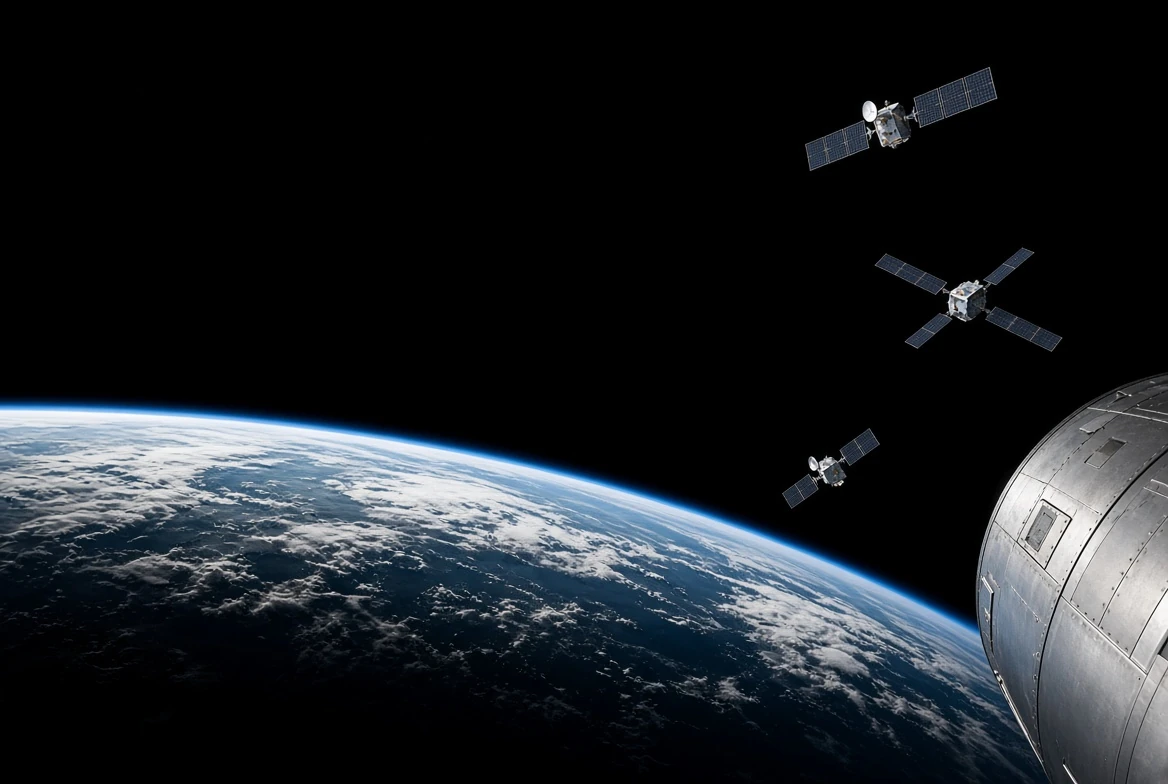
For illustrations we use our own and supplied photographs as well as symbolic images, some of which are created or edited with digital tools. Where legal transparency or labelling obligations apply to individual content, it is marked accordingly. The AI-generated images in this article are labelled in their captions.

