Explained · Updated 19 October 2026
Tesla Roadster 2026: Performance, Thrust and Rocket explained
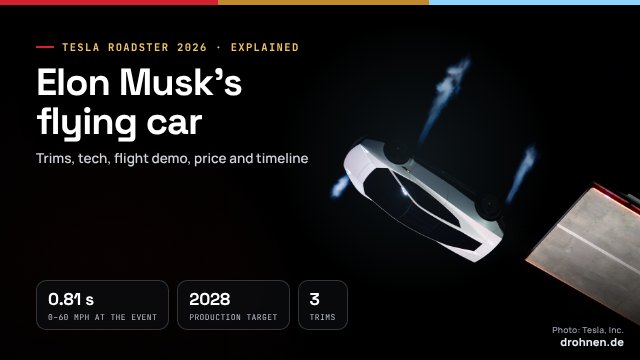
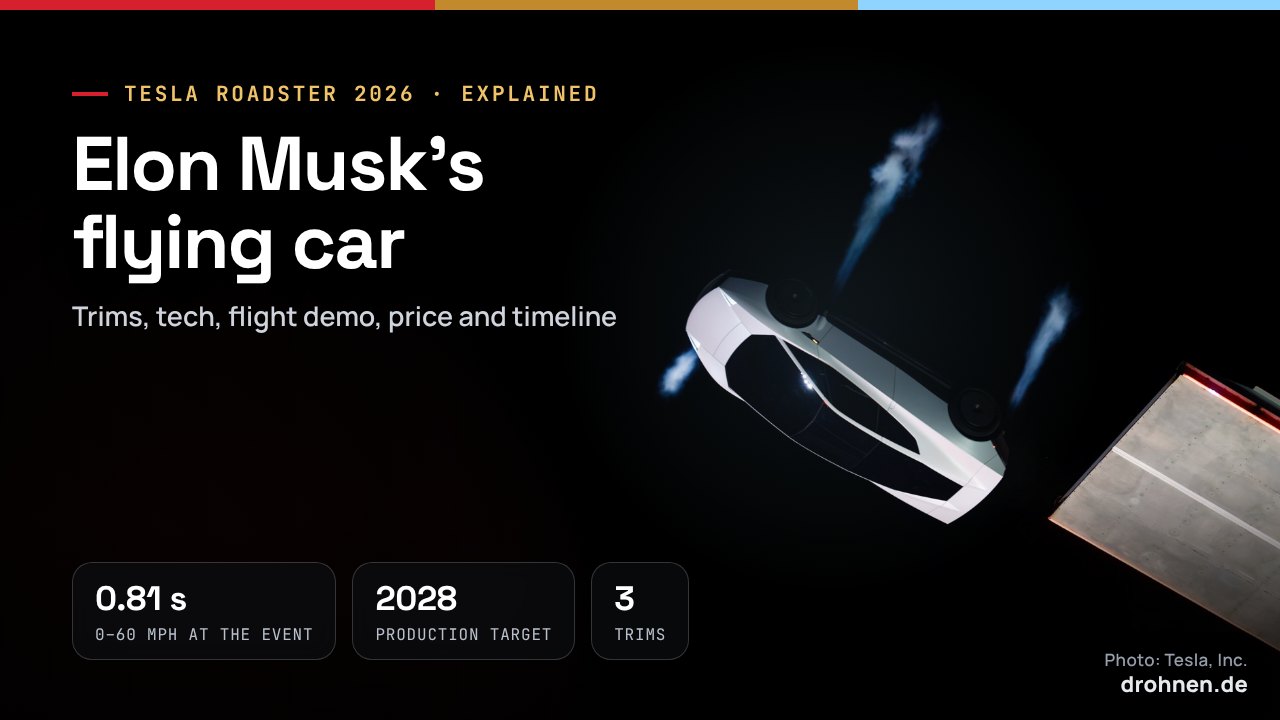
Tesla has demonstrated the new Roadster at SpaceX’s test site in Texas – with fan-generated downforce, cold-gas thrusters and a jump off a ramp. What the three trims can do, what a reservation costs and what remains open on the road to the 2028 production target.
- 0–60 mph in 0.81 seconds during the live demo, according to Tesla
- Flight capability only on the single-seat Rocket, not approved for roads
- Reservation: $5,000 now plus $45,000 or $245,000 within ten days
Unveiled on 15 October 2026 (local time) · SpaceX test site, McGregor, Texas
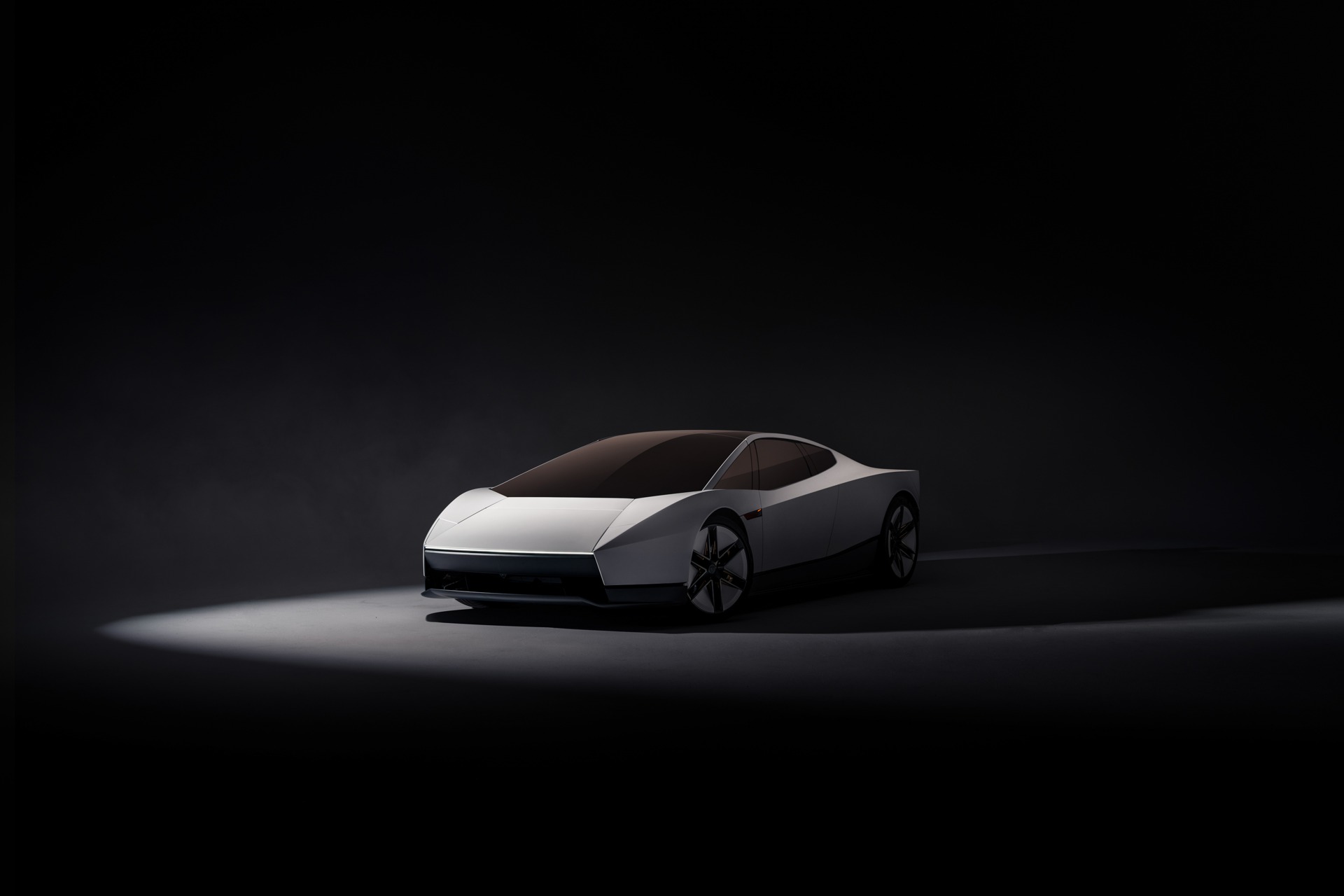
The new Tesla Roadster is an electric sports car with a fan system for extra downforce and – depending on the trim – cold-gas thrusters borrowed from spaceflight. Tesla offers it in three versions: the road-ready two-seat Performance, the limited, track-focused Thrust with rear thrusters, and the single-seat Rocket, which is invite-only and, according to Tesla, can fly. Tesla unveiled the car on the evening of 15 October 2026 local time in a livestream from the SpaceX test site in McGregor, Texas. Elon Musk named 2028 as the start of production.
Nine years after the next-generation Roadster was first shown, the project finally has hard material again: a 23-minute official video, a reworked product page and a reservation page with concrete amounts. This explainer covers what Tesla officially states, what could be seen and heard at the demonstration, how the technology works and which questions remain open for buyers – from the purchase price and road approval to delivery dates.
Updated: 19 October 2026. Based on Tesla’s US, UK and German product pages, the reservation pages, the full recording of the event on Tesla’s channel and Tesla’s posts on X. We have not driven the Roadster ourselves; performance figures are manufacturer claims or statements made during the presentation.
The key facts in 20 seconds
Performance for the road, Thrust with rear thrusters for the track, Rocket as an invite-only flying single-seater.
A suction system pulls air from under the car. Tesla says it is strong enough to hold the car upside down, even when stationary.
The 0–60 mph time shown on screen during the demo run. The figure has not been independently measured.
Musk named 2028 as the start of production. No delivery dates for individual markets were given.
$50,000 for Performance and $250,000 for Thrust are reservation payments. Tesla has not published a vehicle price.
Tesla itself states that the Rocket is not approved for public road use and may not be available in all regions.
Performance, Thrust and Rocket: three very different Roadsters
Before discussing the new Roadster, it is worth asking which trim a claim refers to. Tesla’s US product page lists three versions with different purposes, seat counts and ways of getting one. The most spectacular abilities – flight manoeuvres and rolls – belong exclusively to the Rocket. Merging the three profiles into one car that has every extreme figure at once would be wrong.
By reservation
Performance
2 seats · road ready
The core trim for road and track, with active aerodynamics and the multi-mode suction system.
- Active aerodynamic elements
- Fan-driven suction for downforce
- 0–60 mph in under 1.6 s, says Tesla
- No cold-gas thrusters listed
$5,000 + $45,000reservation in the US
Limited release
Thrust
2 seats · race ready
Adds cold-gas thrusters at the rear to the suction system, pushing the car forward on top of the drivetrain.
- Rear thrusters as an acceleration boost
- 0–60 mph in under 0.9 s, says Tesla
- One reservation per customer
$5,000 + $245,000reservation in the US
Invite only
Rocket
1 seat · air ready
Thrusters around the perimeter support forward and upward acceleration as well as lateral rotation. “So yes, it can fly,” Tesla writes.
- Thrusters around the whole car
- 0–60 mph in under 0.59 s, says Tesla
- Not approved for public roads
- Not available in all regions
no public amountnot selectable in the reservation flow
| Feature | Performance | Thrust | Rocket |
|---|---|---|---|
| Purpose | road ready | race ready, limited | air ready, invite only |
| Seats | 2 | 2 | 1 |
| Suction system and active aero | yes | yes | yes |
| Cold-gas thrusters | not listed | at the rear, for acceleration | around the car, also for lift and rotation |
| 0–60 mph per Tesla on X | under 1.6 s | under 0.9 s (product page: under 1 s) | under 0.59 s |
| Top speed per Tesla | not stated separately | over 230 mph (about 370 km/h) | |
| Range per Tesla | over 300 miles, about 480 km (test cycle not stated) | ||
| Reservation (US) | $5,000 + $45,000 | $5,000 + $245,000 | no public amount |
| Road approval | open | open | not approved, per Tesla |
Tesla’s footnotes deserve a close look. The US and UK pages state that the features and specifications shown “are reflective of our Thrust augment only and are available as an optional upgrade”. On top of that, the paragraphs about holding the car upside down, steer-by-wire, Track Mode and stabilising the car “in flight” carry a footnote saying they are available with the Rocket trim only, which is not offered in all regions. Anyone reserving a Performance should therefore not assume every ability shown in the video.
More figures appear not on the product page but in a post by Tesla on X shortly after the event: a range of over 300 miles, a top speed of over 230 mph for the Rocket, and 0–60 mph times of under 1.6 seconds (Performance), under 0.9 seconds (Thrust) and under 0.59 seconds (Rocket). The product page’s “under 1 second” for the Thrust and the post’s “under 0.9” do not contradict each other, but they show how vague “under” figures are. Tesla does not say how the range was measured, and there is no WLTP figure for Europe yet.
The event in McGregor: what Tesla showed
The presentation was streamed live on Tesla’s YouTube channel and on X. According to the recording’s metadata, the broadcast began on 16 October at 00:55 UTC – still the evening of 15 October in Texas and just before 3 a.m. in Central Europe. The venue was SpaceX’s rocket test and development site in McGregor, about 4,000 acres in size. As a warm-up, the hosts said, a Raptor engine had been static-fired.
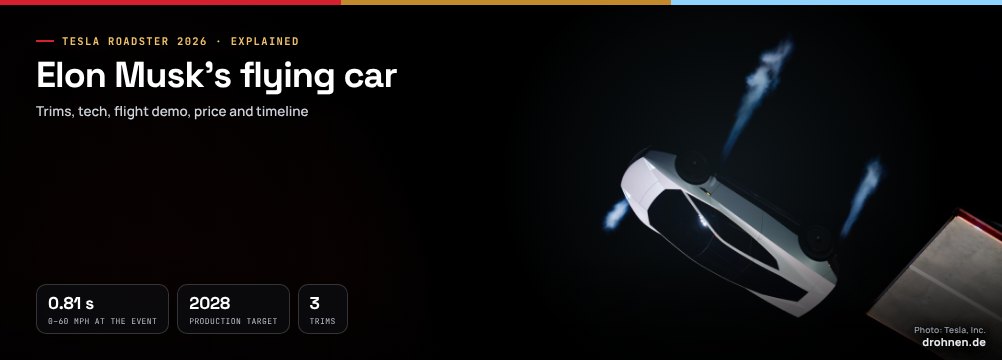
On stage, Elon Musk was joined by Tesla chief designer Franz von Holzhausen and Lars Moravy, Tesla’s vice president of vehicle engineering. According to McGregor’s mayor pro tem, around 200 to 300 guests watched on site, local broadcaster KWTX reported. The recording runs for about 23 minutes and is divided into chapters. The ramp demonstration, in which a Roadster lifted off and was stabilised in the air, a manoeuvre dubbed the “kickflip” and an acceleration run on the test pad drew the most attention.
Official video
Roadster Event – full recording
The original source for every clip currently doing the rounds. If you want to know whether an excerpt is genuine, you will find the scene here in context. The chapters jump straight to the right moment. As a manufacturer video, it naturally shows the car at its best.
The video only loads from YouTube after you click (privacy-enhanced mode).
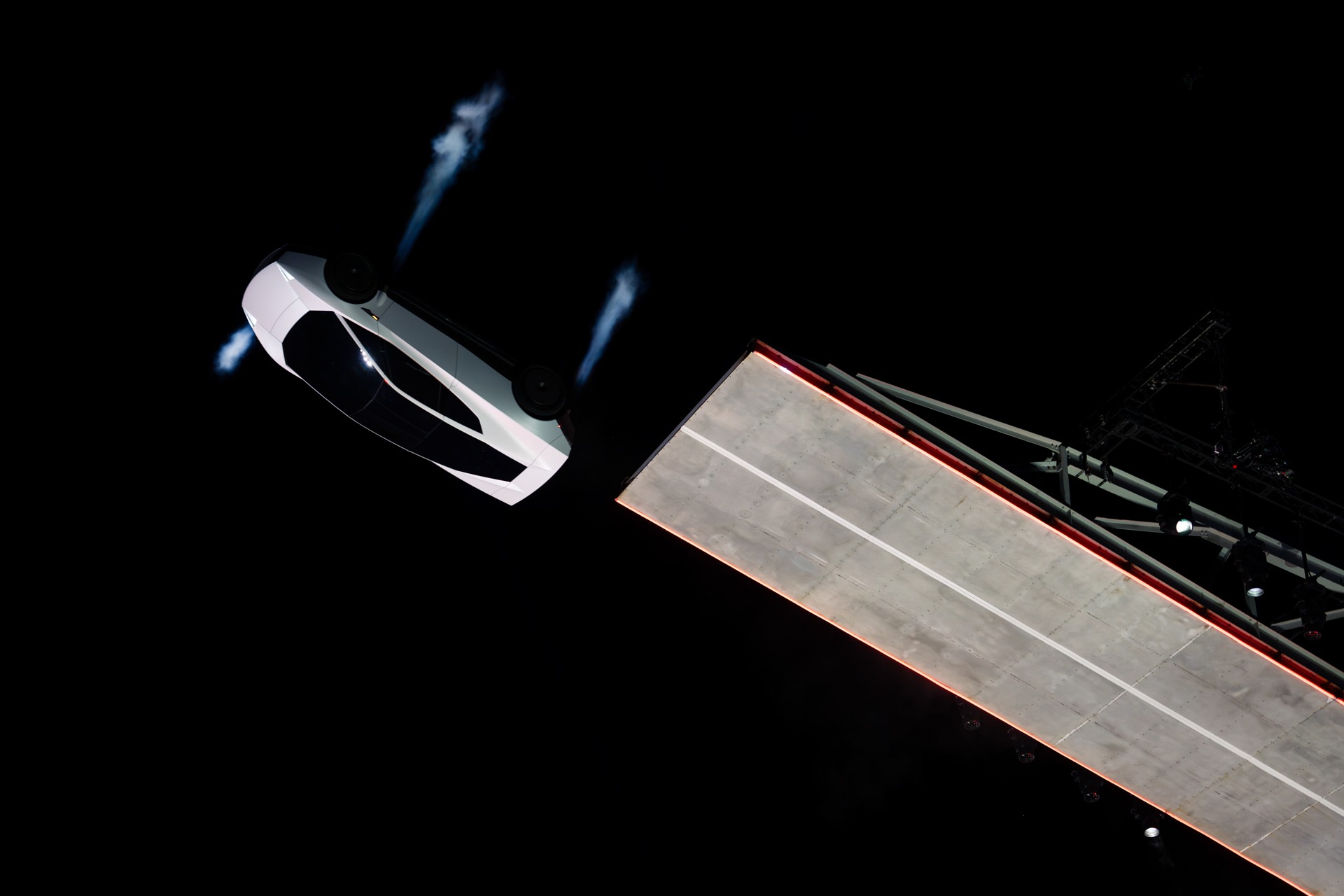
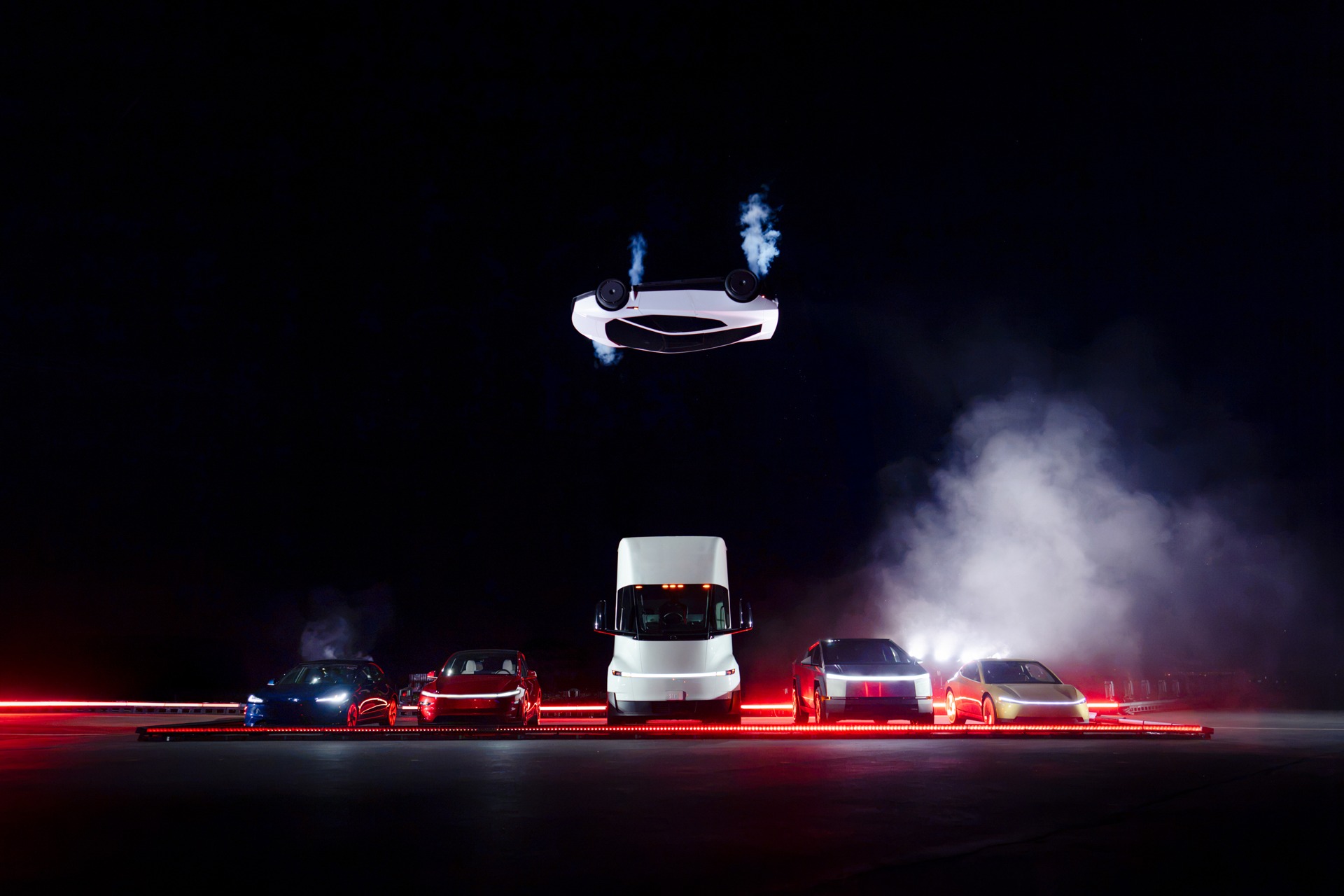
One detail matters for interpreting the footage: according to Musk, the car was “technically autonomous” for the demo to make sure nobody got hurt. The hosts introduced a figure in the car as Starman – and stressed that it was not a real person. Media reports variously describe the car as remote-controlled or autonomous, but all agree that no human was inside during the flight manoeuvres. The flight manoeuvres were therefore an automated demonstration, not proof of how the car flies in a customer’s hands.
Tesla also accompanied the presentation on X. The following posts come from the official Tesla account; we noted the view counts on 19 October.
TTesla@Tesla · 15 Oct 2026
“Roadster event livestream”
TTesla@Tesla · 16 Oct 2026
“Holy smokes”
TTesla@Tesla · 18 Oct 2026
“The 6 stages of Roadster”
What was said on stage – with timestamps
Many figures for the new Roadster come from the presentation rather than the product page. We picked out the key statements using the recording’s automatic transcript. The timestamps take you straight to the right moment in the original video so you can check every sentence yourself.
- 2:30
We need an audience to prove that it’s not AI …
Elon Musk to the spectators at the test site - 4:39
It is technically autonomous for this demo to make sure we don’t kill anyone.
Musk on how the demonstration was run; long term, the Roadster is meant to be Tesla’s only manually driven car - 7:46
Flying cars are real.
Musk straight after the ramp demo - 8:11
A fan suction system on the bottom of the car can pull up to 2 g.
Explaining how the car could stick upside down; SpaceX technology does “the rest” - 10:22
This is not necessarily a safety-optimised car.
Musk on the Rocket’s flight capabilities - 11:50
I’m not sure it’s necessarily legal in all jurisdictions, but there will be such a car that someone can own.
Musk after the “kickflip” - 12:11
Two pressure vessels, 600 litres in total, about 250 kilos of air and ten nozzles.
Technical figures for the thruster system shown; the car can refill its air tank itself - 18:30
0.81 seconds.
Time of the 0–60 mph run, shown during the event - 20:28
The car can go over 230 miles per hour.
Musk on top speed, roughly 370 km/h - 21:12
We enter production in 2028 – actually, for real.
Musk’s answer to the question of when customers will get the car, met with laughter from the audience
The quotes show how the presentation was pitched: as a show mixing technical details with punchlines. For a buying decision, the sentences about safety, legality and production matter most. Musk himself cautioned right at the start that success was “not guaranteed”.
The technology: fans, cold-gas thrusters and steer-by-wire
Technically, the new Roadster rests on three pillars that Tesla sums up in one line on its product page: active aero, cold-gas thrusters and a multi-mode suction system. On top of that comes electronic steering without a mechanical link. How the parts work together can be reconstructed fairly precisely from the product page and the presentation.
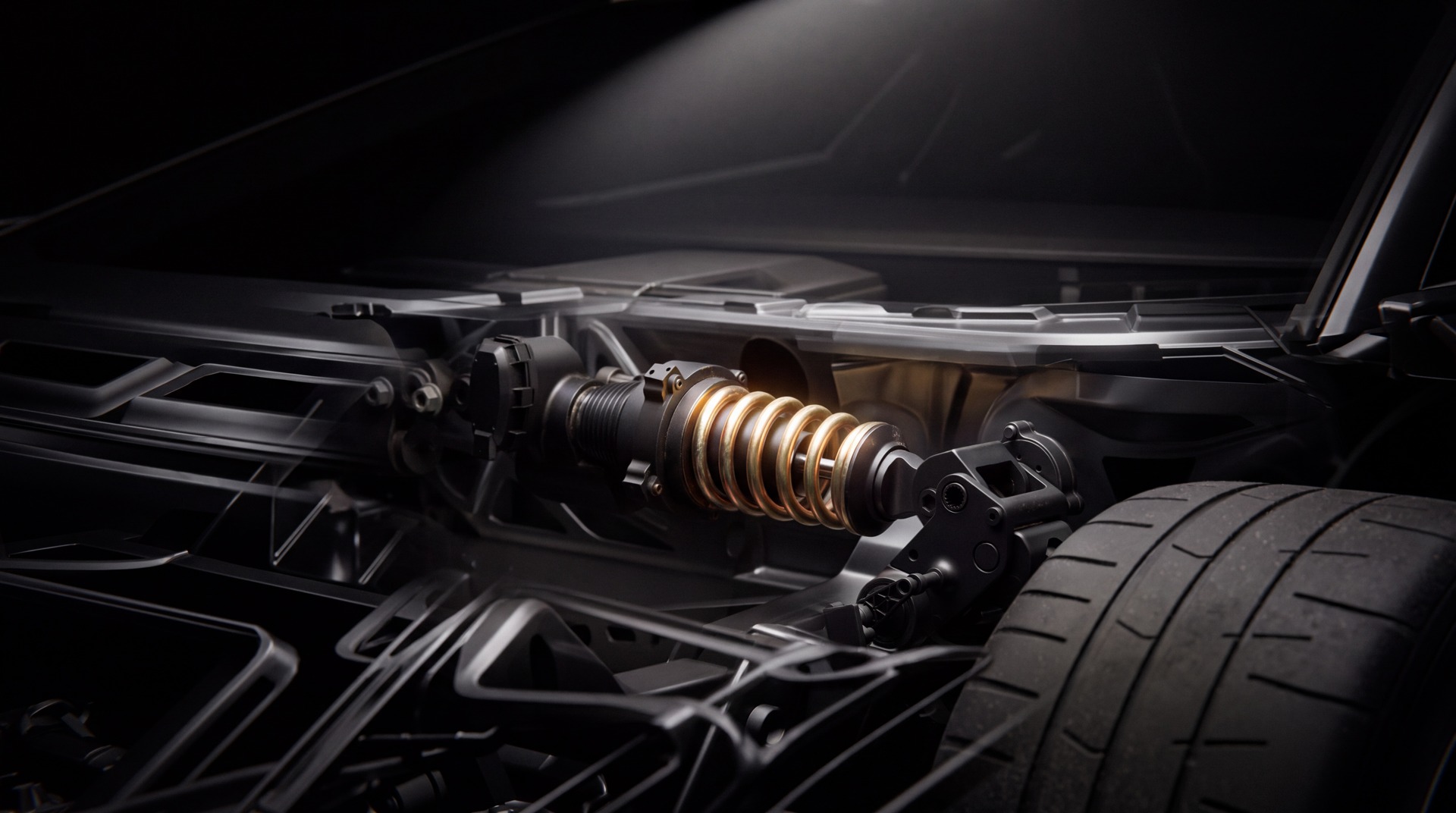
Powered fans pull air from beneath the car while a seal to the ground holds the low pressure. The car is pressed onto the road – even when stationary.
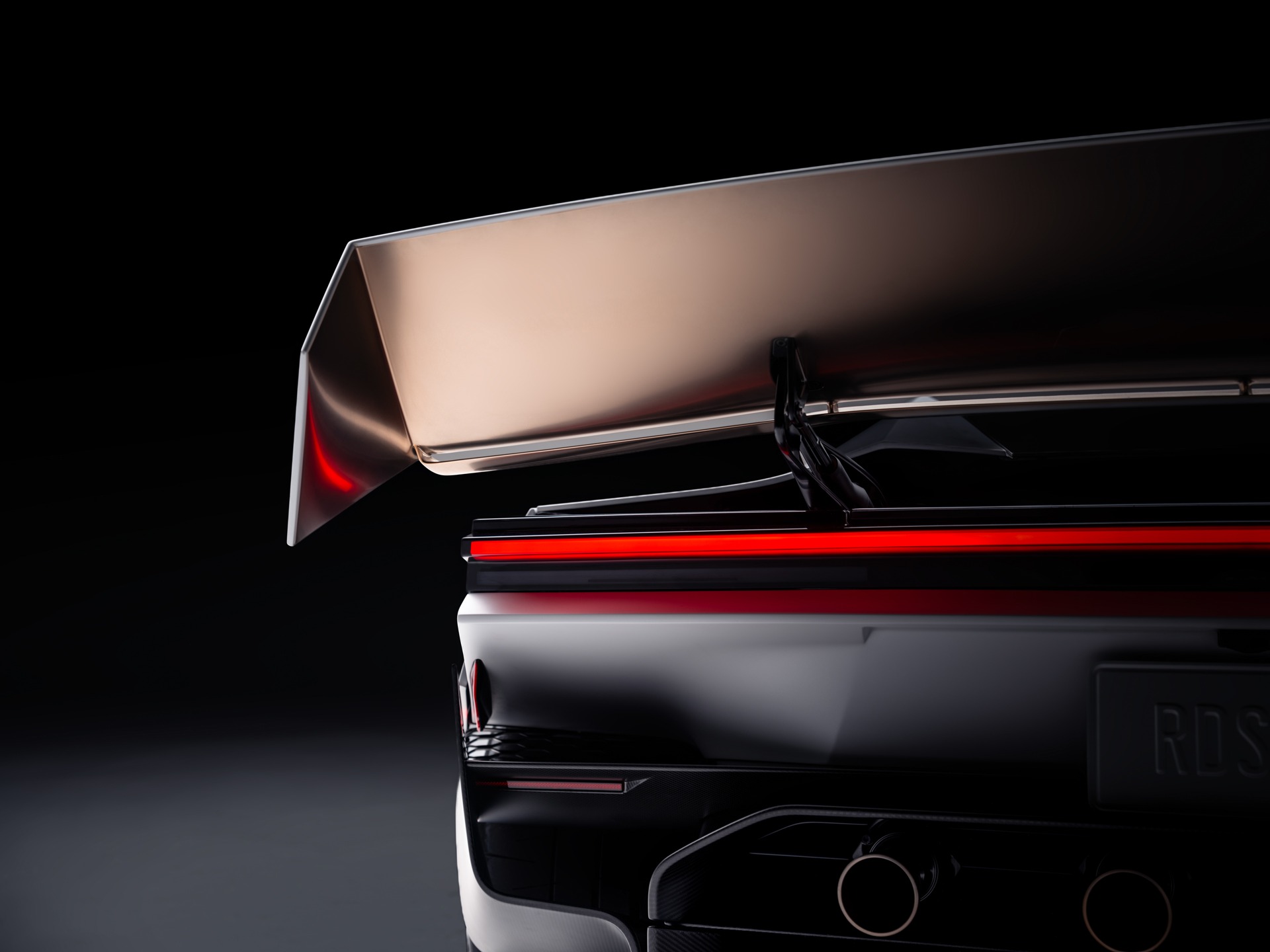
A variable-pitch rear wing with two modes: high downforce for corners or low drag for the straights.
Compressed air from two high-pressure tanks flows through nozzles and creates thrust – at the rear on the Thrust, all round on the Rocket.
According to the presentation, steering, brakes and throttle are all by-wire. Drivers steer with a yoke rather than a round wheel.
The suction system is the most interesting component for track use. A wing only produces downforce when air flows over it, whereas a powered fan works regardless of speed. Tesla says this creates enough suction “to hold the vehicle upside down, even when stationary”. During the presentation, the team said ordinary tyres typically manage about 1.26 g; with the suction system, cornering at more than 2 g would be possible. At low speed the system sucks the car down; at high speed the front and rear sections open to channel more air under the car.
The principle is not new: the British McMurtry Spéirling also uses fans and drove upside down on a rotating rig in 2025. Fan cars go back even further, to the Chaparral 2J of 1970 and the Brabham BT46B, which won a Formula 1 race in 1978.
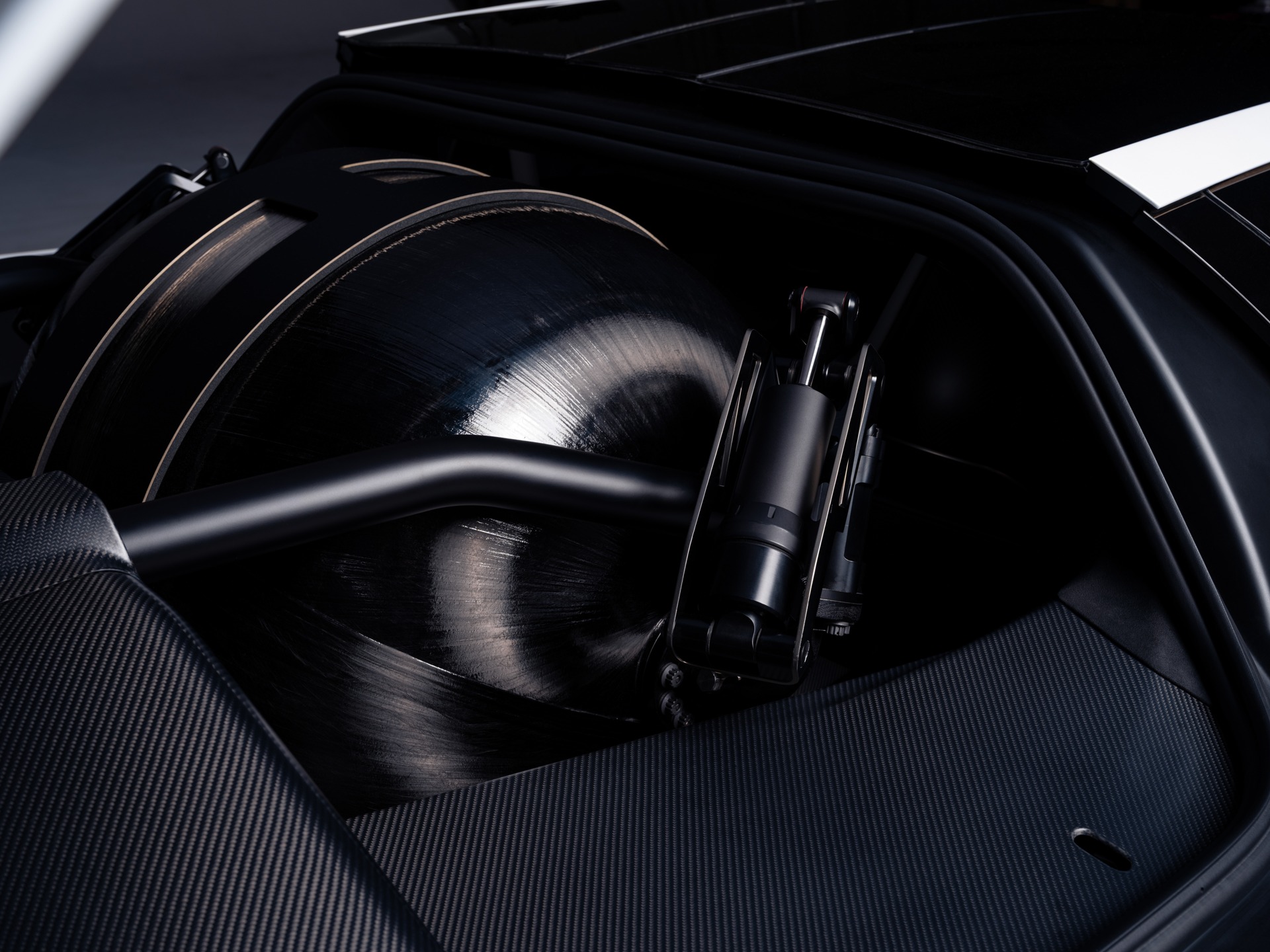
The cold-gas thrusters come from spaceflight, where such systems orient satellites and rocket stages. According to the presentation, two carbon-overwrapped pressure vessels holding 600 litres in total store about 250 kilograms of air at very high pressure. Ten nozzles release it on demand; the product page says the actuators are all-electric and make micro-adjustments “within a fraction of a second”. No rocket propellant is needed: the car is supposed to refill its air tank itself. At the four rear nozzles, the team said, the exhaust leaves faster than the speed of sound – visible as so-called Mach diamonds in the jet.
Lars Moravy went into far more detail in an interview with the car magazine Hagerty. According to him, two electric motors drive only the rear wheels and together deliver more than one megawatt (over 1,340 hp) and more than 1,400 Nm – unlike the all-wheel-drive, three-motor concept of 2017. The Thrust gets four cold-gas thrusters fed from a 200-litre tank of compressed nitrogen behind the seats. The Rocket replaces the passenger seat with another 400-litre tank and adds six more thrusters. Together that makes the 600 litres and ten nozzles mentioned on stage. That the stage talked about air and the interview about nitrogen is no real contradiction: air is about 78 per cent nitrogen.
Interview
The Flying Tesla Roadster explained by the man who engineered it
Host Henry Catchpole talks to Lars Moravy about the drivetrain, battery, fans, thrusters and cockpit. Not a Tesla video, but the most detailed technical source so far, straight from the engineer in charge. The figures are statements made in conversation, not an official spec sheet.
The video only loads from YouTube after you click (privacy-enhanced mode).
According to a summary of the interview by TeslaNorth, Moravy also gave a weight of just under 1,700 kilograms (final figures pending), 4680 cells at around 800 volts and a target of 15 to 80 per cent charge in about ten minutes. The limits of the thruster system become clear too: refilling all 600 litres currently takes six to seven hours, with about 30 minutes as the goal. For the Thrust, which uses the nozzles to accelerate, and even more for the Rocket, that is the key practical question – how often the boost can be used on a track and what maintenance the high-pressure tanks need.
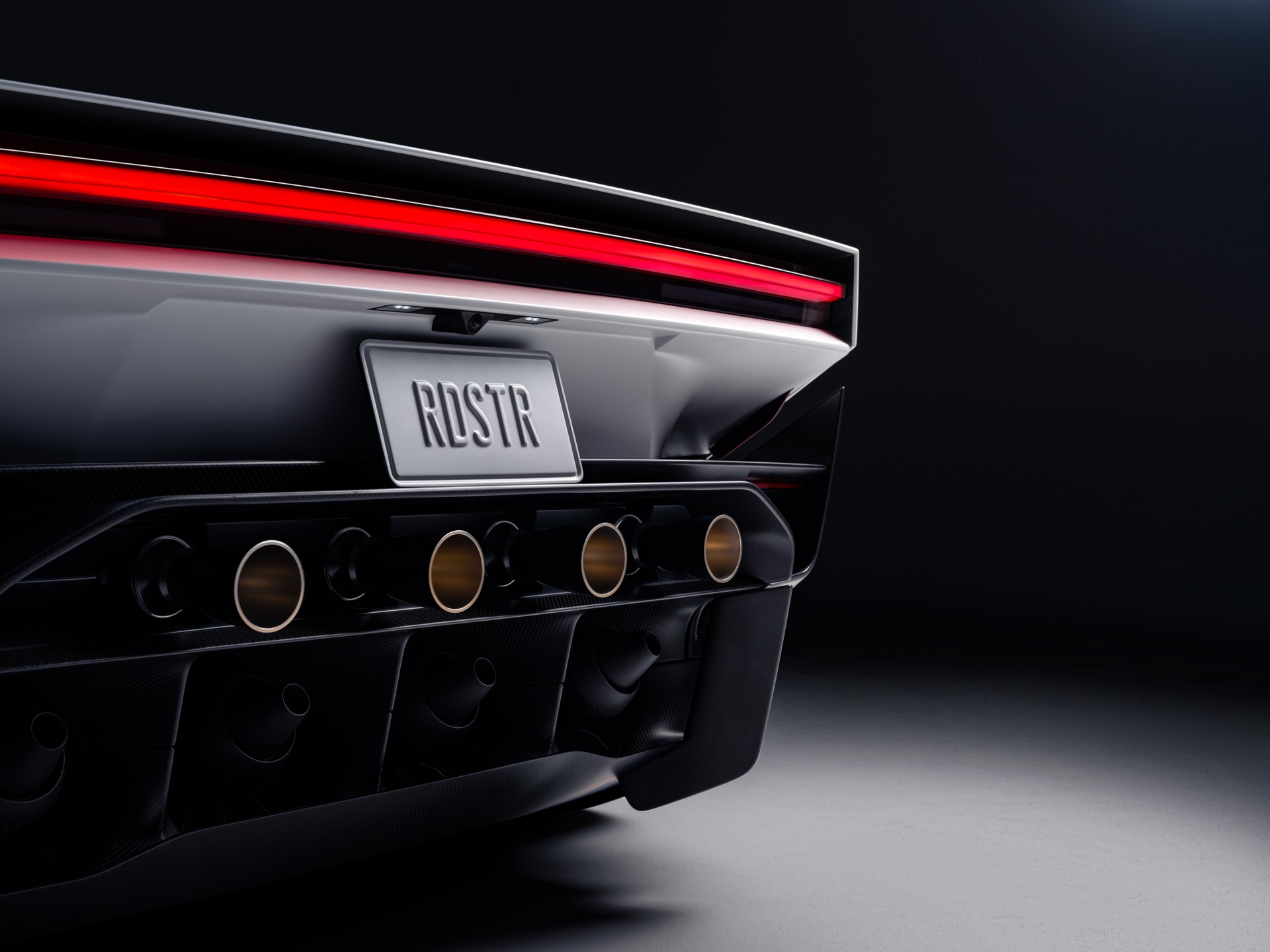
Steering and chassis barely feature in the clips but are crucial for drivers. According to the presentation, steering, brakes and throttle are by-wire, and the yoke was designed specifically for steer-by-wire. The US product page also describes a Track Mode that lowers the car and transforms the suspension, plus selectable high-downforce and low-drag modes. For weight saving, Tesla mentions magnesium, titanium and carbon fibre, seats moulded into the chassis with a fixed seating position, and manual controls.
0.81 seconds: what the figure means – and what it doesn’t
The number of the night was 0.81 seconds – the time the Roadster needed to go from 0 to 60 miles per hour in the acceleration run, as shown during the presentation. Tesla advertises the Thrust with “0–60 in under 1 second” on its US and UK pages, while the German, French, Italian and Spanish pages say “0–100 in under 1 second”. That is a separate claim, not a conversion: 60 mph equals about 96.6 km/h, so 100 km/h is a little further. On X, Tesla also gave target figures for all three trims – from under 1.6 seconds for the Performance to under 0.59 seconds for the Rocket.
Four points matter. First, the time was set under event conditions on a shortened run; the team itself said there was “not a whole lot of room out on the pad”. Second, the Thrust uses rear-thruster force on top of tyre grip, so acceleration does not depend on the tyres alone. Third, Musk said the production car would do “better than that”, the limit being not to “detach the retina” of the driver. And fourth, not all figures are measured the same way: Hagerty host Henry Catchpole described the Rocket figure as a rollout time. US magazines traditionally ignore the first foot of the run, which shortens the time noticeably. Until an independent, documented test exists, 0.81 seconds remains a manufacturer figure from a demonstration.
Why mph and km/h must not be mixed
A table that lists a 0–60 mph figure next to European 0–100 km/h times compares different distances. A fair comparison needs the same target speed, the same start definition and comparable conditions. One mile is 1,609.344 metres, so 60 mph is about 96.56 km/h.
Design and interior: spaceflight as the template
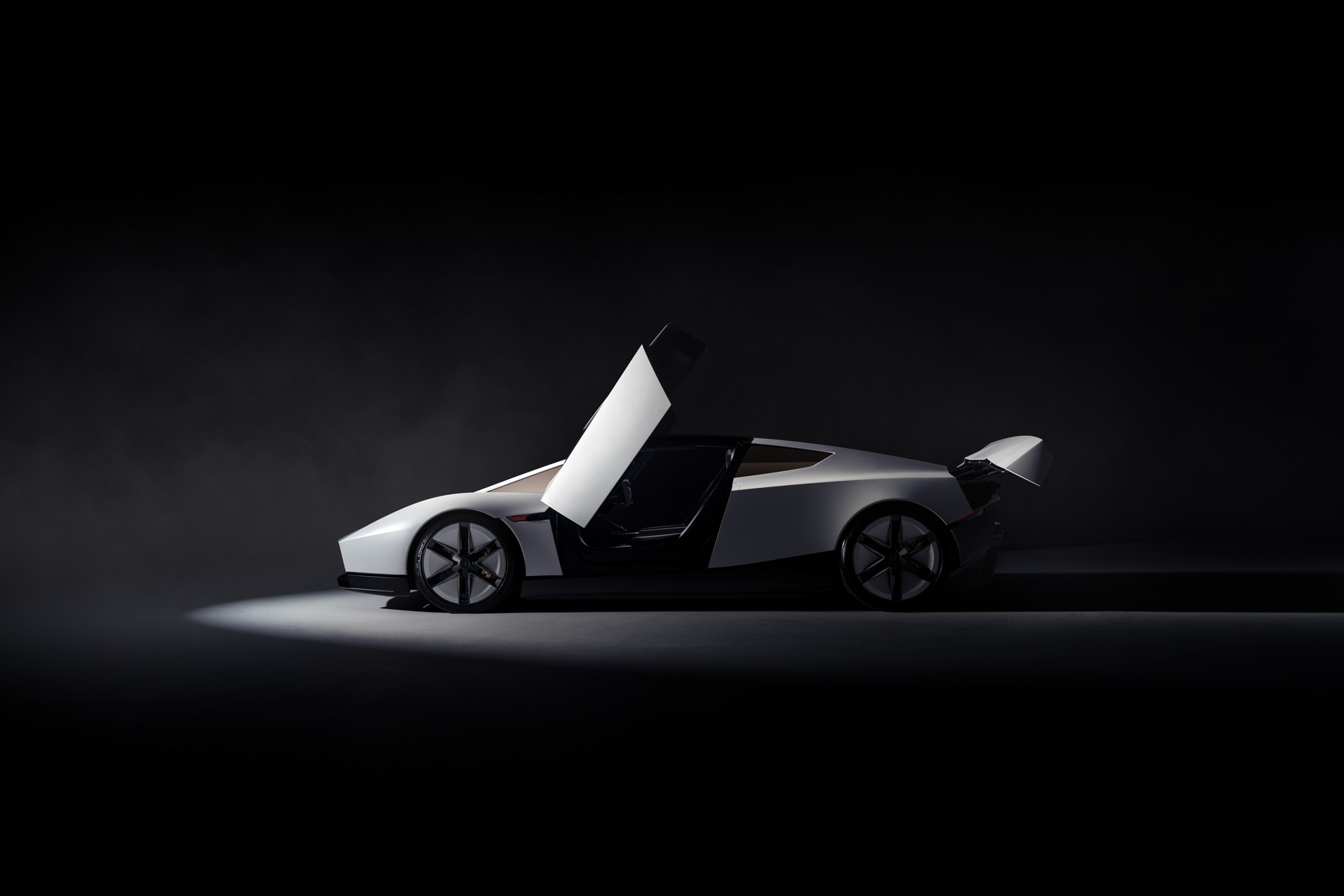
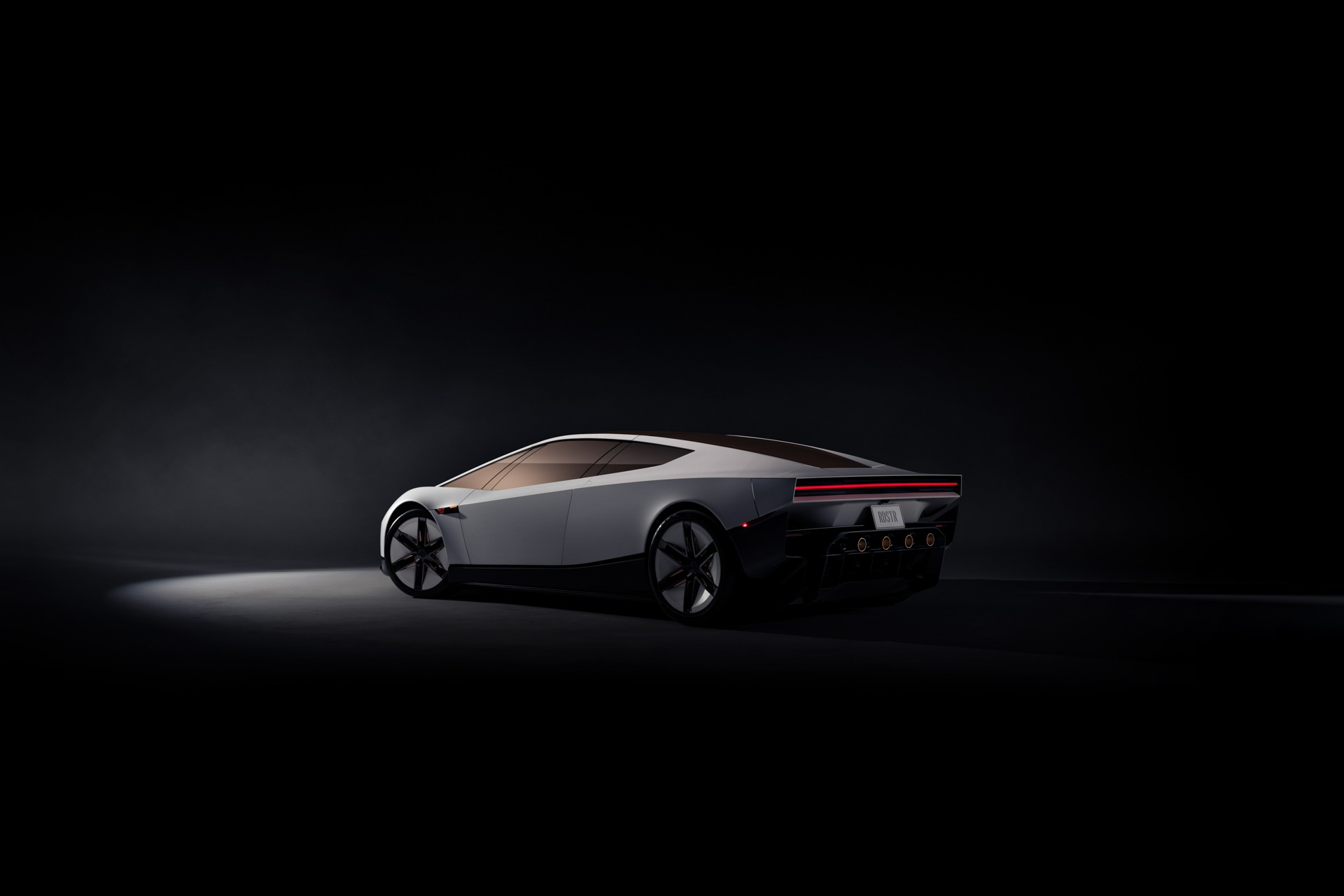
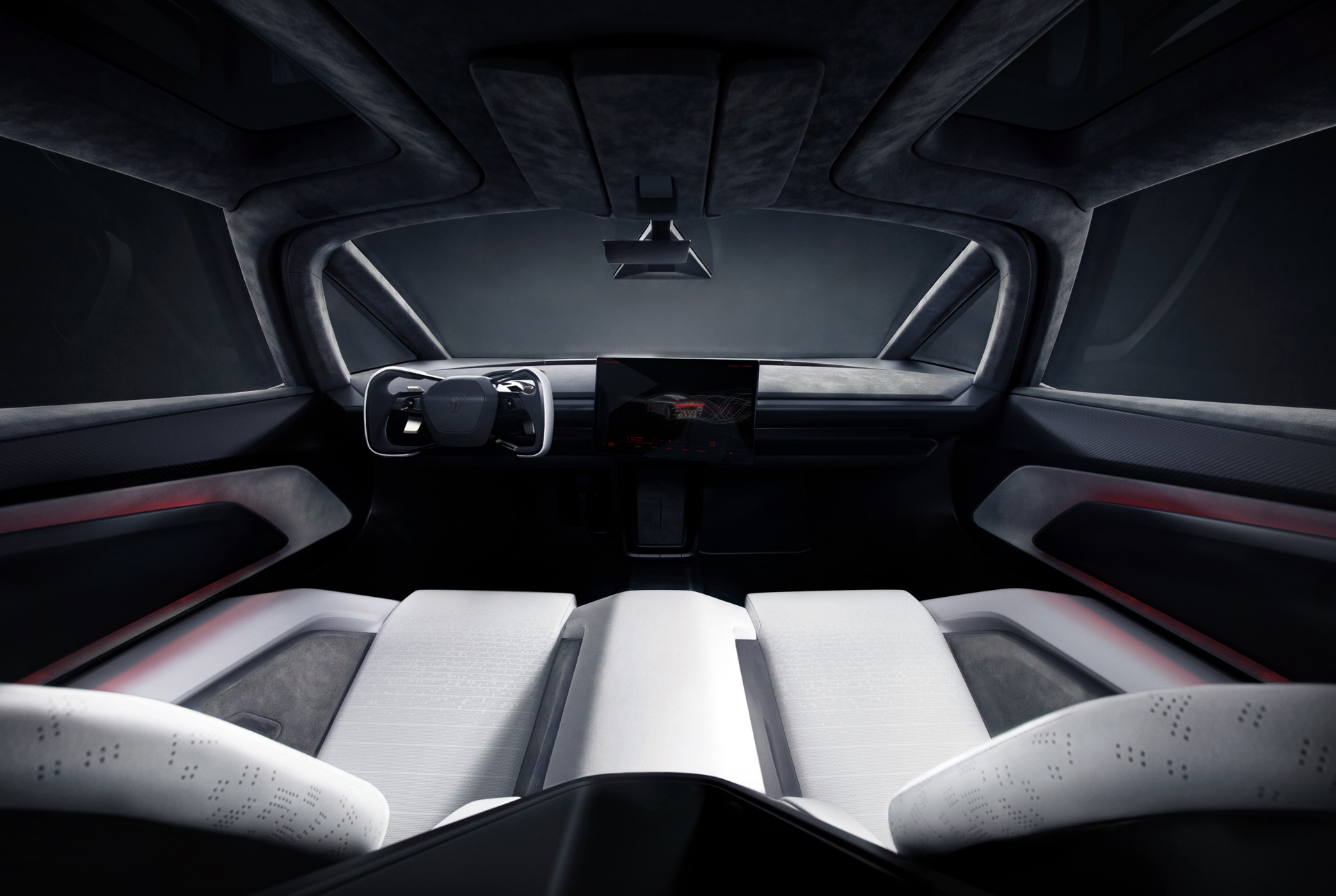
Visually, the 2026 Roadster has little in common with the red prototype of 2017. On stage, the design team named the SR-71 reconnaissance aircraft and transforming cars as inspiration. Tesla describes hidden headlights, a full-length taillight and flush-mounted aerodynamics that “conceal the vehicle’s true form”. Thin-spoked wheels are meant to be very light yet strong.
The Ano White paint, Tesla says, takes inspiration from aerospace techniques: UV and cryogenic protection in space plus electrostatic dissipation and corrosion resistance for rockets before launch and during recovery. The windows are tinted gold to mimic the copper coating of spacesuit visors, complemented by titanium accents.
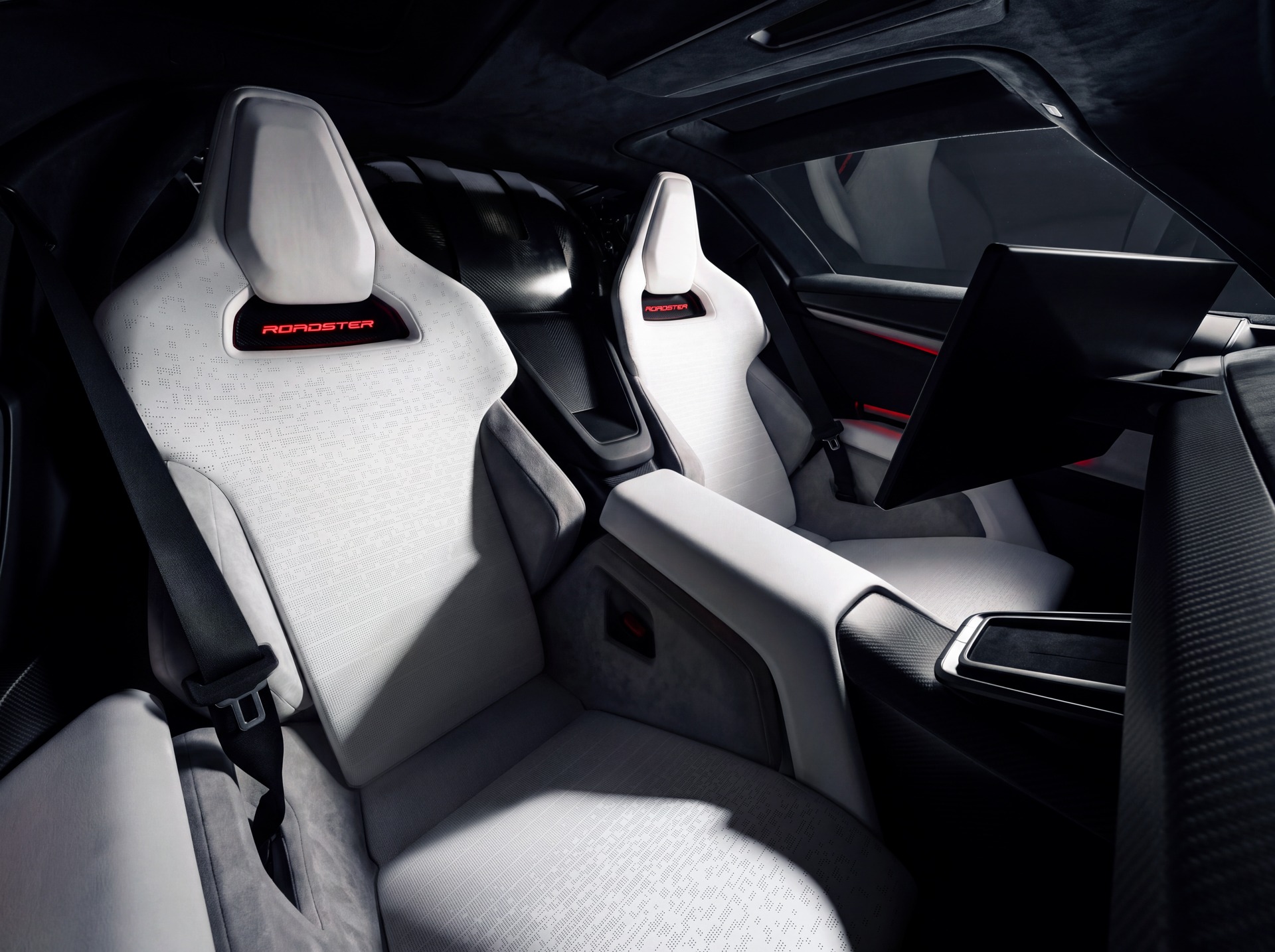
Inside, Tesla uses an Ultrawhite interior with grey microsuede details. The seats have microsuede bolsters and a “speed line” perforation pattern. According to the US page, the driver faces a yoke designed for steer-by-wire, a centre touchscreen and two smaller forward displays for critical driving information. Because the seats are moulded into the chassis, the seating position is fixed – so other things, such as pedals or steering, would have to adjust. How well that works for drivers of different sizes is one of the practical questions only a test drive can answer.
Roadster 2017 versus 2026: what is left of the original plan
Many spec sheets online still mix the 2017 figures with the 2026 car. Back then, Tesla unveiled the next-generation Roadster alongside the Semi truck and quoted numbers that are still widely repeated. The table separates the two.
| Feature | Concept 2017 | Roadster 2026 |
|---|---|---|
| Seats | 2+2 | 2 (Performance, Thrust), 1 (Rocket) |
| 0–60 mph | 1.9 s | under 1.6 s (Performance) to under 0.59 s (Rocket), 0.81 s at the demo |
| Top speed | over 250 mph announced | over 230 mph (Rocket) |
| Battery and range | 200 kWh, over 620 miles | over 300 miles; battery capacity not published |
| Drivetrain | three motors, all-wheel drive | two motors, rear-wheel drive, over 1 MW (per Moravy) |
| Highlights | removable glass roof | suction system, cold-gas thrusters, steer-by-wire |
| Planned availability | 2020 | production from 2028 |
The idea of building space technology into the Roadster is older than the new design. As early as June 2018, Musk announced on Twitter a “SpaceX option package” with about ten small rocket thrusters, fed with compressed air from a SpaceX pressure vessel – the trade-off being that the 2+2 would become a two-seater. That is exactly what happened in 2026. The range, on the other hand, has shrunk on paper from over 620 to over 300 miles – less than half of the promise on which reservations were collected in 2017. And in February 2018 a Roadster did fly into space: Musk’s personal first-generation Roadster, with the Starman mannequin at the wheel, launched on the Falcon Heavy’s maiden flight. That car has nothing to do with the new model – but the presentation referred to it repeatedly.
Price and reservation: what Tesla actually shows
Tesla has not published a purchase price – only the reservation amounts. On the US reservation page, the Performance requires $5,000 up front, labelled “fully refundable”, and a further $45,000 within ten days. For the Thrust, the second payment rises to $245,000. The UK page shows the same figures in pounds, and euro markets such as Germany, France, Italy and Spain the same figures in euros. The conditions read: “Reservations are not final until payment is received. Reservation subject to cancellation if payment is not completed within 10 days. Refunds for modifications will not be issued.”
Calculate the reservation payments
Choose market and trim. The calculator only adds up the reservation payments shown by Tesla and does not convert currencies.
US$5,000 due today + US$45,000 within 10 days = US$50,000 in reservation payments in total. Not a confirmed vehicle price.
Amounts according to Tesla’s reservation pages for the US, UK, Germany and France, checked on 19 October 2026. The Rocket cannot be freely selected in the reservation flow.
Headlines such as “the Roadster costs $50,000” are therefore wrong: they confuse the reservation amount with the price of the car. The reservation also says nothing about delivery dates or which features will be included in the configuration you order.
Release date: production from 2028 – with a history
Asked when customers will get the car, Musk answered at the end of the presentation that production will start in 2028 – adding, amid laughter, “actually, for real”. The audience had its reasons: when the car was unveiled in 2017, availability was announced for 2020, and the date has slipped several times since. In Tesla’s quarterly investor updates, the Roadster was listed as “In development” for years, and in early 2026 as “Design Development”.
- Nov 2017UnveilingShown together with the Semi, with availability announced for 2020.
- Feb 2018Roadster in spaceMusk’s first-generation Roadster flies on the Falcon Heavy – a different car.
- 2020–2025In developmentTesla lists the Roadster as a development project in its quarterly updates; target dates keep moving.
- Sep 2026Date movedThe event was planned for 1 October; because of severe weather forecasts, Tesla moved the outdoor show to 15 October.
- 15 Oct 2026Demo in TexasNew design, three trims, flight and acceleration demos, reservations open.
- 2028Production targetAnnounced start of production. Factory, volumes and regional delivery dates are open.
A production target is not a delivery date. Between the start of production and handover lie the ramp-up, market approvals and logistics. Musk also announced a further demonstration: a jump over Snake River Canyon, in a nod to stuntman Evel Knievel’s failed attempt in 1974. Two days later he added on X that future demos would include flying over the Snake River “or maybe Grand Canyon”, landing on the wheels and exceeding half the speed of sound. No date was given for any of them.
Is the Roadster road-legal – and may it fly?
The clearest statement comes from Tesla itself: the Rocket is “not approved for public road use” and may not be available in all regions. According to the European product pages, availability is also subject to the legal requirements and applicable laws of each region. On stage, Musk said he was not sure such a car was legal in all jurisdictions.
For the Performance and Thrust, road approval depends on each market’s vehicle regulations – in the European Union, on the type approval every new production car must pass. Whether and with which functions that will succeed is open, especially for nozzles that expel compressed air at supersonic speed. No European or UK authority has commented so far. In the US, regulators already have: the FAA told CBS News that “the Tesla vehicle does not meet the FAA definition of an aircraft”. NHTSA said the manufacturer must comply with federal motor vehicle safety standards and that it “won’t hesitate to act to protect the driving public”. Flying is another matter altogether: a crewed vehicle that leaves the ground falls under aviation law and would need certification as an aircraft. The European Union Aviation Safety Agency (EASA) sets out separate requirements for vertical take-off and landing aircraft. Drone rules do not help here – they only apply to uncrewed aircraft. Germany’s Aviation Act is worth noting: under section 1(2), even “spacecraft, rockets and similar flying objects” count as aircraft while they are in airspace. No authority has assessed whether a jumping Roadster would qualify. Our assessment: lifting off in public spaces in Germany is hard to imagine without permission under aviation law.
Tesla explicitly rules out public road use for the Rocket.
A crewed vehicle in the air is no longer a car under road traffic rules – and not a drone either.
There is no published road approval for the Performance or Thrust in Europe so far.
Reactions: between amazement and scepticism
Few car launches in recent years have spread so quickly and divided opinion so sharply. Musk’s own post with the ramp clip had reached around 77 million views by 19 October. Reactions range from admiration for the engineering to fundamental doubts about its use.
Fact-checking site Snopes rates the videos “True”: an audience and the press were on site, and there is no sign of AI. Whether it really “flew” is open to interpretation.
Top Gear calls its abilities “largely useless and yet utterly enthralling” and compares the suction system to the McMurtry Spéirling.
According to Reuters, analyst Gene Munster called it “an engineering flex with no commercial value”; Morningstar expects around 2,000 cars a year.
Tesla shares rose almost 5 per cent pre-market on 16 October but, according to The Motley Fool, closed 2.1 per cent lower at $354.72.
EElon Musk@elonmusk · 16 Oct 2026
“Turns out the future does have flying cars”
YYann LeCun@ylecun · 17 Oct 2026
“Cute demo, but totally impractical.”
EElon Musk@elonmusk · 18 Oct 2026
“I fart in your general direction 💨”
The best-known criticism came from AI researcher and NYU professor Yann LeCun. His back-of-the-envelope maths: compressed air has a specific impulse of less than 50 seconds; even if half the car’s mass were compressed air, that would give less than ten seconds of useful thrust, “probably more like 5 seconds”. Musk replied with the Monty Python quote. LeCun’s estimate is close to the calculation in our fact check of the flight video: there, too, the air supply only lasts for seconds in the air.
The car press is divided as well. Electrek considers the engineering real but doubts Tesla will sell more than a handful of Thrust and Rocket cars, and points to the halved range. British car reviewer Mat Watson of Carwow suspects, according to MotorBiscuit, that the demo cars had been “seriously lightened”. And on 18 October Musk himself put the project in context on X: Optimus and Cybercab would make up the vast majority of Tesla’s value – “But Roadster is super cool, so we’re doing it anyway.”
Our assessment: a great show, not yet a finished car
For us, the fan system is at least as exciting as the flight. Downforce that does not depend on speed could fundamentally change how a sports car behaves on track. The challenge lies in the overall package: energy use, noise, sealing, durability and driving feel all have to work together. For buyers, that is a more important question than any single spectacular clip.
What speaks for the Roadster
- An original approach to traction without relying on airflow
- Clearly separated trims with understandable profiles
- An official, complete video source instead of rumours
- Lightweight construction with magnesium, titanium and carbon fibre
What remains open
- Purchase price, official weight and battery capacity
- Independently measured performance
- Road approval for the Performance and Thrust in Europe
- A reliable path from production to delivery
Fan downforce, cold-gas thrusters and steer-by-wire in one car: technically, the Roadster is one of the most unusual projects in the industry.
Before paying $50,000 or $250,000, price, specification and terms should be in writing.
Not every “flying Tesla” video comes from the demo. If in doubt, compare it with the original recording.
Tesla Roadster 2026: frequently asked questions
When was the new Tesla Roadster unveiled?
On the evening of 15 October 2026, Texas time, in a livestream from the SpaceX test site in McGregor, Texas. In Europe it was already the early morning of 16 October.
Which versions are there?
Three: the road-ready two-seat Performance, the limited two-seat Thrust with rear cold-gas thrusters, and the single-seat Rocket, which is invite-only and can fly.
Can every Tesla Roadster fly?
No. Tesla attributes the flight functions exclusively to the Rocket, which has thrusters all around the car. The Performance and Thrust are not designed for it.
How much does the Tesla Roadster cost?
Tesla has not published a purchase price. To reserve, Tesla asks for $5,000 up front plus $45,000 (Performance) or $245,000 (Thrust) within ten days; the UK and euro markets use the same figures in pounds and euros.
How fast is the new Roadster?
The demo run showed 0–60 mph in 0.81 seconds. On X, Tesla gives under 1.6 seconds for the Performance, under 0.9 for the Thrust and under 0.59 for the Rocket, plus a top speed of over 230 mph for the Rocket. None of these figures has been independently measured.
What range does the new Roadster have?
Tesla states over 300 miles, about 480 kilometres, without naming a test cycle. That is less than half of the over 620 miles Tesla announced in 2017. There is no WLTP figure for Europe yet.
When will the Roadster be released?
Musk named 2028 as the start of production. No delivery dates for individual countries have been given; factory, volumes and market launch are open.
Is the Roadster road-legal?
No road approval has been published so far. Tesla itself says the Rocket is not approved for public roads. The Performance and Thrust would need approval in each market, for example EU type approval.
How does the suction system work?
Powered fans pull air from beneath the car and create low pressure that presses it onto the road – even when stationary. According to the presentation, this allows cornering at more than 2 g.
What are cold-gas thrusters?
Nozzles that expel compressed air to create thrust, without burning anything. According to the presentation, the Roadster stores about 250 kilograms of air in two tanks totalling 600 litres and can refill them itself.
Does the new Roadster have four seats?
No. The 2017 concept was announced as a 2+2. The Performance and Thrust have two seats, the Rocket one.
Who was in the car during the flight demo?
According to Musk, the car was technically autonomous for the demo. The figure inside was Starman – “not a real human”, as the hosts stressed. Media describe it as a mannequin in a SpaceX suit or as a robot.
Is the Roadster an aircraft?
Not according to the US Federal Aviation Administration: the Tesla vehicle does not meet the FAA definition of an aircraft. No European authority has classified it yet.
Where can I watch the original video?
On Tesla’s YouTube channel under the title “Roadster Event”. It is embedded in this article and only loads after a click.
Conclusion: the best show in years, but not yet a reason to buy
With the demonstration in Texas, Tesla brought the Roadster back on stage after nine years – and how: fan downforce, cold-gas thrusters, a car jumping off a ramp and 0.81 seconds to 60 mph. The presentation is well documented, the product page separates the three trims clearly and reservations are open.
What buyers still lack are the decisive details: price, official weight, a European range figure, road approval and a reliable delivery date. Flight remains reserved for the Rocket, which is not allowed on public roads. Anyone tempted by the Roadster should read the reservation terms carefully and only pay money they can do without for years. For everyone else, the Roadster is above all one thing: the most exciting engineering project Tesla has shown in a long time.
TransparencySources and data23 entries
This article is based on Tesla’s product and reservation pages, the full recording of the Roadster event and Tesla’s posts on X, all accessed on 19 October 2026. Quotes from the event were taken from YouTube’s automatic transcript. Sources already linked in the text are listed without a second link. Manufacturer claims, media reports and our own assessments are labelled as such in the text.
Tesla (manufacturer sources)
- Tesla US: Roadster product page – linked in the text (trims, 0–60 mph, steer-by-wire, Track Mode, Rocket footnotes)
- Tesla Germany: Roadster product page (0–100 km/h claim, availability note)
- Tesla US: reserve a Roadster – linked in the text ($5,000 + $45,000 or $245,000, conditions)
- Tesla UK: reserve a Roadster (payments in pounds)
- Tesla on YouTube: “Roadster Event”, livestream of 15/16 October 2026 – embedded in the text (chapters, quotes, 0.81 s, 2028)
- Tesla on X: posts of 15, 16 and 18 October 2026 – linked in the text
- Tesla: Semi and Roadster unveil, 2017 (historic figures: 1.9 s, 200 kWh, 620 miles, 2+2 seats, 2020)
Media, regulators and reactions
- Tesla on X: trim overview of 16 October 2026 – linked in the text (range over 300 miles, 0–60 mph targets, over 230 mph)
- Hagerty on YouTube: interview with Lars Moravy, 16 October 2026 – embedded in the text (drivetrain, tanks, thrusters; statements in conversation)
- TeslaNorth: summary of the Hagerty interview, 16 October 2026 – linked in the text (weight, battery, refill time)
- CBS News: questions to DOT, FAA and NHTSA, 16 October 2026 – linked in the text
- Snopes: fact check of 16 October 2026 – linked in the text (rating “True”)
- Top Gear: “The Tesla Roadster has finally landed”, 16 October 2026 – linked in the text
- Reuters (via Spokesman-Review): launch report, 15 October 2026 – linked in the text (Munster, Morningstar)
- The Motley Fool: market report of 16 October 2026 – linked in the text (close at $354.72)
- Electrek: report by Fred Lambert, 15 October 2026 – linked in the text
- MotorBiscuit: Mat Watson’s view, 18 October 2026 – linked in the text
- KWTX: report of 16 October 2026 – linked in the text (200 to 300 guests)
- X: posts by Elon Musk (June 2018 and 16, 17 and 18 October 2026) and Yann LeCun (17 October 2026) – linked in the text
- Gesetze im Internet: section 1 of the German Aviation Act (LuftVG) – linked in the text
Regulation and physics
- EASA: Vertical Take-Off and Landing – linked in the text (general framework, no Roadster classification)
- NIST: conversion factors (1 mile = 1,609.344 metres)
- NASA: State of the Art of Small Spacecraft Technology, In-Space Propulsion (how cold-gas thrusters work)
Note: This article provides general information as of 19 October 2026. Performance and equipment figures come from Tesla or Tesla’s presentation and have not been independently verified. Reservation amounts are not purchase prices. This article is not legal advice on vehicle approval or operation.
Transparency and editorial note: In view of the transparency requirements under Article 50 of the EU AI Act, which have applied since 2 August 2026, our articles are checked for content, put into editorial context and approved before publication. Final assessment and editorial responsibility lie with our editorial team.
For visual design, we use our own and supplied photographs as well as illustrative images and illustrations. These may be created or adapted with the help of digital tools during production or editing. Where statutory transparency or labelling obligations apply to individual content, it is marked accordingly.

